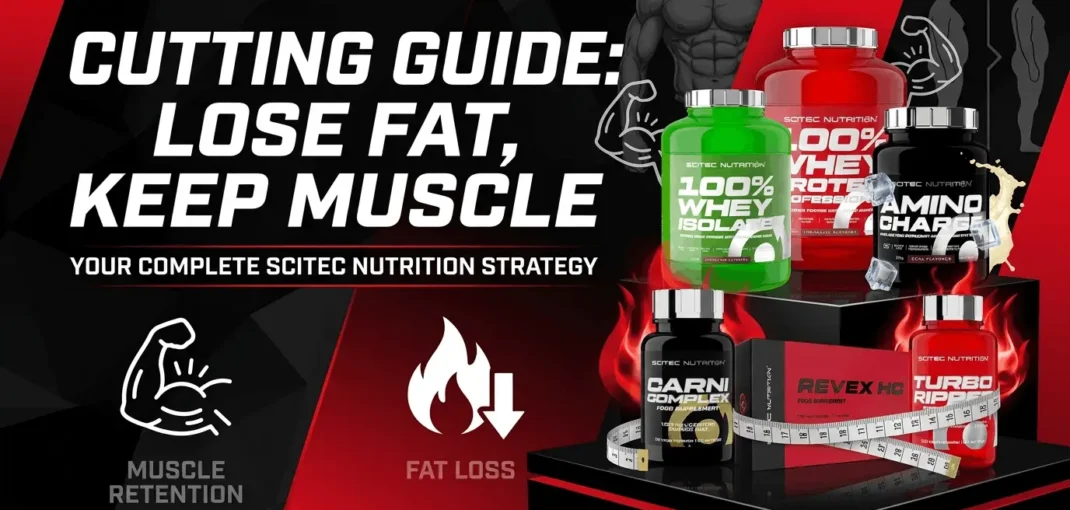
You have spent months — maybe years — building strength and size. Now you want to reveal the physique underneath. But the thought of losing hard-earned muscle in the process is holding you back. You are not alone. This is the central challenge of every cutting phase. It is exactly why the ultimate guide to cutting: lose fat, keep muscle exists.
Cutting is not simply about eating less. It is a precisely engineered phase of nutrition, training, and recovery. It forces your body to burn fat while signaling that muscle is still needed. Done correctly, a cut will leave you leaner, more defined, and stronger-looking than ever. Done incorrectly, it will leave you smaller, weaker, and frustrated.
In this comprehensive guide, we will walk you through every element of a successful cut. We cover calculating your calorie deficit, optimizing macronutrients, structuring your workouts, and choosing the right supplements. Whether you are a competitive bodybuilder or a gym-goer in Lebanon looking to get lean for summer, this guide gives you the science-backed tools to succeed.
What Is a Cutting Phase?
A cutting phase is a deliberate, time-bound period. The primary goal is to reduce body fat percentage while preserving as much lean muscle mass as possible. It is the counterpart to a bulking phase, where the goal is muscle growth, often accompanied by some fat gain. Together, these two phases form the foundation of most physique-focused training programs.
The cutting phase is not a crash diet. It is a structured, methodical approach that requires patience and consistency. The key mechanism behind fat loss is a calorie deficit. You consume fewer calories than your body burns, forcing it to draw on stored fat for energy.
Why Cutting Is More Difficult Than Bulking
During a bulk, you eat in a calorie surplus. Your body has all the energy it needs for muscle growth and recovery. During a cut, you restrict calories, creating a state of energy scarcity. The challenge is that your body does not automatically choose to burn fat in this state. Without the right stimulus, it may break down muscle tissue for energy as well. This is known as muscle catabolism, and preventing it is the central challenge of every cutting phase.
The body’s tendency to break down muscle during a calorie deficit is driven by evolutionary survival mechanisms. Your body perceives a calorie deficit as a threat. It responds by reducing metabolically expensive tissue — muscle — to conserve energy. Overriding this response requires strategic nutrition and consistent resistance training.
Who Should Consider a Cutting Phase?
A cutting phase suits individuals who have already built meaningful muscle mass. The goal is to reduce body fat and reveal that muscle. It is not ideal for true beginners, who are often better served by a body recomposition approach. If you are unsure where to start, use our Protein Calculator. It will determine your baseline nutritional needs based on your specific goals.
Step 1: Setting Up Your Calorie Deficit for Fat Loss
The calorie deficit is the engine of fat loss. Without it, no amount of training or supplementation will produce meaningful fat reduction. However, the size of your deficit is critical — too large, and you risk muscle loss; too small, and fat loss will be negligible.
Calculating Your Maintenance Calories
Your maintenance calories are the calories required to maintain your current body weight. This is determined by your Basal Metabolic Rate (BMR) — the calories your body burns at rest. This is then multiplied by an activity factor that accounts for your lifestyle and exercise habits. Use our Protein Calculator to estimate your daily caloric needs.
The Optimal Calorie Deficit Range
For most individuals, a deficit of 300 to 500 calories per day is the sweet spot for losing fat while keeping muscle. This creates a sustainable rate of fat loss of approximately 0.5 to 1 pound (0.2 to 0.5 kg) per week, which research consistently identifies as the range that minimizes muscle loss.
More aggressive deficits (500 to 1,000 calories per day) may suit individuals with a high body fat percentage. They have more stored energy to draw upon. For leaner individuals, large deficits significantly increase the risk of muscle catabolism. They are generally not recommended.
| Deficit Size | Weekly Fat Loss | Muscle Loss Risk |
| 200–300 kcal/day | ~0.2–0.4 kg/week | Very Low |
| 300–500 kcal/day | ~0.4–0.7 kg/week | Low |
| 500–750 kcal/day | ~0.7–1.0 kg/week | Moderate |
| 750–1,000 kcal/day | ~1.0–1.4 kg/week | High |
Tracking Your Progress
Weigh yourself daily and calculate a weekly average to track fat loss accurately. Daily fluctuations in water weight can be misleading. If your weekly average is not decreasing after two to three weeks, reduce calories by a further 100 to 150 per day. If you are losing more than 1 kg per week, increase calories slightly. This protects muscle mass.
Understanding Metabolic Adaptation
As your cut progresses, your metabolism will adapt to the lower calorie intake. This is known as metabolic adaptation or the “starvation response.” Your body becomes more efficient, burning fewer calories at rest. This is why fat loss often slows down after the first few weeks of a cut, even if you maintain the same deficit.
To combat metabolic adaptation, consider incorporating diet breaks every 6 to 8 weeks. These are periods of 1 to 2 weeks at maintenance calories. Research suggests diet breaks can restore metabolic rate and improve hormonal profiles. They also make the overall cut more sustainable.
Step 2: Optimizing Macronutrients for Muscle Preservation
Total calories determine whether you lose weight. Your macronutrient breakdown determines whether that weight comes from fat or muscle. During a cutting phase, macros must be carefully structured to maximize muscle retention and performance.
Protein: The Non-Negotiable Macronutrient for Cutting
Protein is the most critical macronutrient during a cut. It serves three vital functions. It provides amino acids for muscle repair and maintenance. It has a high thermic effect — your body burns more calories digesting protein than carbs or fat. It also promotes satiety, helping you manage hunger in a calorie deficit.
During a calorie deficit, protein requirements actually increase compared to a maintenance or surplus phase. The body is under greater stress, and muscle protein breakdown is elevated. Research in the British Journal of Sports Medicine recommends 1.6 to 2.2 grams of protein per kilogram of body weight per day for those engaged in resistance training.
Meeting these targets from whole food is challenging when total calories are restricted. A high-quality supplement like 100% Whey Protein Professional by Scitec Nutrition provides 22 grams of fast-absorbing whey protein per serving. It is enriched with L-Leucine, L-Glutamine, and L-Arginine. Leucine is the key amino acid that triggers muscle protein synthesis. It is essential for muscle preservation during a cut.
For a deeper dive into protein requirements, read our guide on How Much Protein Per Day Do You Need?
Best Protein Sources for a Cutting Diet
Not all protein sources are equal during a cut. Lean, high-quality sources are preferred because they provide maximum protein with minimal calories from fat and carbohydrates. Excellent choices include:
- Chicken breast (~31g protein per 100g, ~165 kcal)
- White fish (cod, tilapia — ~20g protein per 100g, ~90 kcal)
- Egg whites (~11g protein per 100g, ~52 kcal)
- Greek yogurt (0%) (~10g protein per 100g, ~59 kcal)
- Whey protein (~22g protein per 30g serving, ~114 kcal)
Carbohydrates: Fuel for Performance During a Cut
Carbohydrates are the primary fuel source for high-intensity resistance training. Cutting carbohydrates too aggressively will impair your ability to train hard. This reduces the muscle-preserving stimulus from your workouts. Do not eliminate carbohydrates; reduce them strategically.
Focus on complex, fiber-rich carbohydrate sources such as oats, brown rice, sweet potatoes, and vegetables. These provide sustained energy and help manage blood sugar levels, reducing cravings. Time your carbohydrate intake around your workouts. Consuming most of your carbs pre- and post-training maximizes performance and recovery while keeping overall intake controlled.
Fats: Essential for Hormonal Health During a Cut
Dietary fat is essential for the production of hormones, including testosterone, which plays a direct role in muscle retention. Reducing fat intake too severely can suppress testosterone levels. This impairs recovery. Allocate 20% to 30% of your total daily calories to healthy fats. Good sources include avocados, olive oil, nuts, seeds, and fatty fish.
Step 3: Training Strategies to Preserve Muscle During a Cut
Your training program is the primary signal to your body that muscle is still needed. Without a sufficient stimulus, your body has no reason to maintain that metabolically expensive tissue.
Maintain Heavy Resistance Training
The most important training principle during a cut is to keep lifting heavy. Many people switch to lighter weights and higher repetitions when cutting. They believe this will “tone” the muscle. This is a myth. Muscle is preserved by the same stimulus that built it. That means progressive overload with heavy compound movements.
Focus on compound exercises that recruit multiple muscle groups simultaneously:
- Squats and leg press for the lower body
- Deadlifts and Romanian deadlifts for the posterior chain
- Bench press and overhead press for the upper body pushing muscles
- Rows and pull-ups for the upper body pulling muscles
Aim for 3 to 4 resistance training sessions per week. Maintain the same weights and rep ranges you used during your bulk. Strength may decline slightly as the cut progresses. Maintain adequate protein and carbohydrate intake to minimize this decline.
Cardio: A Tool, Not a Solution
Cardiovascular exercise is a useful tool for increasing your calorie expenditure, allowing you to eat slightly more while remaining in a deficit. However, it is not a substitute for a well-structured diet. Excessive cardio can be counterproductive.
Low-Intensity Steady State (LISS) cardio, such as brisk walking or cycling at a moderate pace, is the preferred form of cardio during a cut. It burns calories without significantly taxing your recovery systems. This allows you to maintain training quality in the gym. Aim for 2 to 4 sessions of 30 to 45 minutes per week.
High-Intensity Interval Training (HIIT) can be effective for burning calories in a shorter time, but it places significant demands on recovery. Limit HIIT to 1 to 2 sessions per week. Ensure it does not interfere with your resistance training performance.
The Importance of Recovery During a Cut
In a calorie deficit, recovery is compromised. Your body has fewer resources available for repair and adaptation. Prioritize sleep (7 to 9 hours per night). Manage stress and do not neglect rest days. Overtraining during a cut is a common mistake that accelerates muscle loss and leads to burnout.
Poor sleep elevates cortisol, a catabolic hormone that promotes both muscle breakdown and fat storage — the exact opposite of what you want during a cut. Treat sleep as a non-negotiable part of your cutting protocol. It is as important as your diet and training.
Step 4: Strategic Supplementation for Cutting
While a well-structured diet and training program are the foundation of a successful cut, the right supplements can provide a meaningful edge. They can help manage hunger, protect muscle tissue, and enhance fat metabolism. For a broader overview of building your supplement stack, read our guide on the Best Gym Supplements for Beginners in Lebanon.
Whey Protein: The Foundation of a Cutting Stack
As discussed, meeting your elevated protein requirements during a cut is essential. 100% Whey Protein Professional is an ideal choice. It is low in calories (approximately 114 kcal per serving), high in protein (22g per serving), and enriched with digestive enzymes for optimal absorption. For more on timing your protein intake, read our guide on the Best Time to Take a Protein Shake.
Fat Burners: Enhancing Thermogenesis and Energy
Fat burners are designed to support your cut by increasing thermogenesis (the rate at which your body burns calories), boosting energy levels, and suppressing appetite. When in a calorie deficit, energy levels can drop, making it harder to train with intensity. A quality fat burner can help bridge this gap.
Our weight loss supplement range includes products like Turbo Ripper and Revex HC, formulated with scientifically validated ingredients. Caffeine is one of the most well-researched ergogenic aids, shown to increase metabolic rate and fat oxidation. Green tea extract (EGCG) has also been shown to enhance fat burning, particularly during exercise.
For a full breakdown of the science behind these products, read our comprehensive guide to Weight Loss Supplements in Lebanon.
BCAAs: Protecting Muscle During Training
Branched-Chain Amino Acids (BCAAs) — leucine, isoleucine, and valine — are particularly valuable during a cut, especially if you train in a fasted state or have extended periods between meals. They provide a readily available source of amino acids for the muscles, reducing the rate of muscle protein breakdown during exercise.
BCAA 6400 by Scitec Nutrition provides a research-backed 2:1:1 ratio of leucine to isoleucine to valine, supporting both muscle preservation and intra-workout endurance.
L-Carnitine: Supporting Fat Metabolism
L-Carnitine plays a crucial role in transporting fatty acids into the mitochondria, where they are burned for energy. Supplementing with L-Carnitine may support fat oxidation, particularly when combined with a calorie deficit and regular exercise. Our Carni Complex is an excellent option for those looking to support fat metabolism during their cut.
Common Cutting Mistakes to Avoid
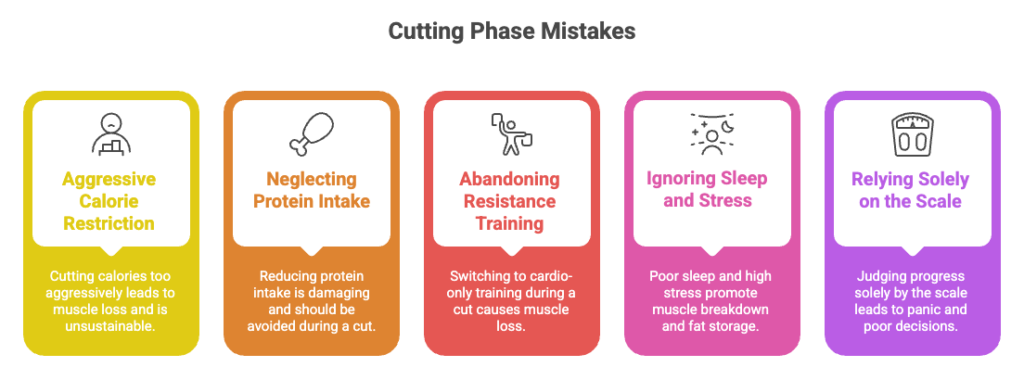
Even with the best intentions, many people undermine their cutting phase with avoidable errors. Awareness of these pitfalls can save weeks of wasted effort.
Cutting Calories Too Aggressively
The desire to get lean quickly is understandable, but a severe calorie restriction is counterproductive. It leads to rapid muscle loss, metabolic adaptation, and a miserable experience that is difficult to sustain. Patience is a virtue in cutting. A sustainable deficit of 300 to 500 calories per day will always outperform an aggressive crash diet in terms of body composition outcomes.
Neglecting Protein Intake
Reducing protein to save calories is one of the most common and damaging mistakes. Protein is the one macronutrient you should never compromise on during a cut. If anything, your protein intake should be higher during a cut than during a bulk. For practical guidance on building a high-protein diet, read our article on 5 Common Supplement Mistakes Beginners Make.
Abandoning Resistance Training
Switching to purely cardio-based training during a cut is a recipe for losing muscle. Resistance training is the primary signal that tells your body to preserve muscle mass. Never abandon it. Reducing training volume slightly is acceptable when energy is low, but the intensity and compound movement focus must remain.
Ignoring Sleep and Stress
Poor sleep elevates cortisol levels, a catabolic hormone that promotes muscle breakdown and fat storage. High stress has the same effect. Prioritizing sleep and stress management is as important as your diet and training during a cut. Aim for 7 to 9 hours of quality sleep per night throughout your cutting phase.
Relying Solely on the Scale
Body weight fluctuates daily due to water retention, glycogen levels, and digestive content. Judging your progress solely by the scale can lead to unnecessary panic and poor decisions. Use a combination of weekly average weight, progress photos, and body measurements to get an accurate picture of your progress.
How Long Should a Cutting Phase Last?
The optimal duration of a cutting phase depends on your starting body fat percentage and your goals. As a general guideline:
- 8 to 12 weeks is the typical range for most individuals.
- Cutting beyond 12 weeks increases the risk of metabolic adaptation, where your body downregulates its calorie burning in response to prolonged restriction.
- If you have a significant amount of fat to lose, consider running multiple cutting phases separated by 2 to 4 week diet breaks at maintenance calories. This allows your metabolism to reset and helps you maintain training performance.
The most successful cutting phases are those that are planned with a clear end date in mind. Having a defined goal — such as a specific body fat percentage or an event — provides motivation and prevents the cut from dragging on indefinitely.
Tracking Progress During a Cut
Monitoring your progress is essential for making informed adjustments. Relying solely on the scale can be misleading due to daily fluctuations in water weight.
Use a combination of the following metrics:
- Weekly average body weight (weigh daily, calculate the average)
- Progress photos (taken weekly under consistent lighting and conditions)
- Body measurements (waist, hips, chest, arms, thighs)
- Strength performance in the gym (a significant drop in strength may indicate muscle loss)
If fat loss stalls for two or more consecutive weeks, reduce your daily calorie intake by 100 to 150 calories. If you are losing weight faster than 1% of your body weight per week, increase calories by 100 to 150 calories to protect muscle mass.
Sample Cutting Diet Plan
To illustrate how these principles translate into practice, here is a sample daily meal plan for a 75 kg male with a daily cutting target of approximately 2,200 calories:
| Meal | Food | Protein | Carbs | Fats |
| Breakfast | 4 egg whites + 1 whole egg, oats, berries | 35g | 50g | 10g |
| Mid-Morning | 1 scoop Whey Protein in water | 22g | 3g | 2g |
| Lunch | 200g chicken breast, brown rice, salad | 50g | 60g | 8g |
| Pre-Workout | Banana + BCAA 6400 | 5g | 25g | 1g |
| Post-Workout | 1 scoop Whey Protein, sweet potato | 22g | 35g | 2g |
| Dinner | 200g white fish, steamed vegetables, olive oil | 40g | 20g | 12g |
| Total | ~174g | ~193g | ~35g |
This plan provides approximately 2,200 calories with a high protein intake to support muscle preservation. Adjust quantities based on your individual caloric target, which you can calculate using our Protein Calculator.
Frequently Asked Questions (FAQ)
What is the best way to lose fat without losing muscle?
The best approach combines a moderate calorie deficit (300 to 500 calories below maintenance), a high protein intake (1.6 to 2.2g per kg of body weight), continued heavy resistance training, and strategic supplementation. Avoid extreme deficits and do not abandon lifting weights. These are the four pillars of a successful cut.
How much protein do I need when cutting?
During a cutting phase, aim for 1.6 to 2.2 grams of protein per kilogram of body weight per day. This is higher than the general recommendation because the body is under greater stress in a calorie deficit and muscle protein breakdown is elevated. Use our Protein Calculator to find your personalized target.
Can I build muscle while cutting?
Building significant muscle while in a calorie deficit is generally not possible for intermediate to advanced trainees. The primary goal of a cut is fat loss and muscle preservation. Body recomposition — simultaneous fat loss and muscle gain — is possible for beginners, those returning from a long layoff, or those with a high body fat percentage.
Should I do cardio every day when cutting?
Daily cardio is not necessary and may be counterproductive if it impairs recovery from resistance training. Aim for 2 to 4 sessions of LISS cardio per week, and limit HIIT to 1 to 2 sessions per week. Your diet should be the primary driver of your calorie deficit, with cardio as a supplementary tool.
What are the best supplements for cutting?
The most effective supplements for a cutting phase are: high-quality whey protein (to meet elevated protein needs), fat burners with evidence-based ingredients like caffeine and green tea extract, BCAAs (for muscle protection during training), and L-Carnitine (to support fat metabolism). Explore our full range of weight loss supplements to find the right products for your goals.
How do I avoid losing muscle when cutting?
The key strategies for preventing muscle loss during a cut are: maintaining a moderate (not aggressive) calorie deficit, consuming sufficient protein, continuing to lift heavy weights with compound movements, prioritizing sleep and recovery, and using muscle-protective supplements like BCAAs and whey protein.
Is it better to cut slowly or quickly?
Slower cuts are almost always superior for muscle preservation. A rate of 0.5 to 1% of body weight per week is the recommended range. Faster rates of weight loss are associated with greater muscle loss, metabolic adaptation, and reduced training performance.
What should I eat before a workout when cutting?
A pre-workout meal during a cut should include a moderate amount of carbohydrates for energy and a source of protein to prime muscle protein synthesis. A banana paired with a scoop of 100% Whey Protein Professional is a simple and effective option. For more guidance, read our article on the Best Time to Take a Protein Shake.
Is whey protein safe to use during a cut?
Absolutely. Whey protein is one of the most researched and safe supplements available. It is simply a concentrated source of protein derived from milk. During a cut, it is especially valuable because it helps you meet your elevated protein targets without consuming excessive calories. Read our detailed guide on Is Whey Protein Safe for Beginners? for a comprehensive breakdown.
How do I know if I am losing muscle during a cut?
Key indicators of muscle loss during a cut include: a significant and rapid drop in strength (more than 10% on key lifts), a decrease in muscle measurements (arms, chest, thighs) alongside weight loss, and a flat or “deflated” appearance in the muscles. If you notice these signs, increase your protein intake, reduce your calorie deficit, and ensure you are continuing to lift heavy weights.
Conclusion: Your Roadmap to a Successful Cut
The ultimate guide to cutting: lose fat, keep muscle comes down to a few non-negotiable principles. Establish a moderate calorie deficit. Prioritize a high protein intake. Keep lifting heavy weights. Use cardio and supplements as strategic tools, not as the primary drivers of your results. And above all, be patient.
A successful cut is not measured in weeks; it is measured in the quality of the physique you reveal at the end. By applying the science-backed strategies in this guide consistently, you will not only lose body fat — you will emerge from your cut leaner, more defined, and with your hard-earned muscle fully intact.
At Muscle Plus, the exclusive agent for Scitec Nutrition in Lebanon, we are committed to supporting your fitness journey with authentic, high-quality supplements. From premium whey proteins to effective fat burners, our full range of products is designed to help you achieve your goals. Browse our supplement store and take the first step toward your best physique today.
Have questions about your cutting plan? Leave a comment below, share this guide with a training partner, or contact our team for personalized supplement advice. We are here to help.