When you need that extra push to crush your fitness goals, the debate between pre-workout vs coffee is one of the most common dilemmas in the gym. Both beverages promise a surge of energy, sharpened focus, and the stamina to push through a grueling session. However, they achieve these results through entirely different mechanisms and ingredient profiles.
Understanding the nuances between a simple cup of joe and a scientifically formulated pre-workout supplement is crucial for maximizing your athletic performance. In this comprehensive guide, we will break down the science behind pre-workout vs coffee, exploring their unique benefits, potential drawbacks, and how to choose the right fuel for your specific training needs.
Whether you are a casual gym-goer looking for a morning pick-me-up or a serious athlete aiming to break personal records, this article will provide you with the insights necessary to make an informed decision. We will also explore how these options fit into your broader fitness strategy, especially if you are sourcing your supplements in Lebanon.
Pre-Workout vs Coffee: At a Glance
Before diving into the details, the table below offers a quick side-by-side comparison of the two most popular pre-workout fuel options.
| Category | Coffee | Pre-Workout |
| Primary Purpose | Alertness and general energy | Training performance and muscle output |
| Caffeine Dose | 80–100 mg per cup (variable) | 150–300 mg per serving (standardized) |
| Onset Time | 45–60 minutes (variable) | 30–45 minutes (consistent) |
| Added Ingredients | None (black coffee) | Beta-alanine, creatine, citrulline, BCAAs |
| GI Sensitivity Risk | Moderate (acidity) | Varies by formula |
| Best For | Casual or moderate workouts | High-intensity and structured training |
| Cost Per Serving | Very low | Moderate to high |
| Caffeine Consistency | Unpredictable | Predictable and labeled |
Understanding the Power of Caffeine in Your Workout
At the heart of the pre-workout vs coffee debate is caffeine, the world’s most widely consumed psychoactive substance. Caffeine acts as a powerful central nervous system stimulant, temporarily warding off drowsiness and restoring alertness. It achieves this by blocking the action of adenosine, a neurotransmitter that promotes sleep and relaxation.
When adenosine receptors are blocked, the brain’s activity increases, leading to enhanced focus, elevated mood, and a noticeable boost in physical energy. For athletes and fitness enthusiasts, caffeine is a proven ergogenic aid—a substance that enhances physical performance, stamina, or recovery.
Research published by the International Society of Sports Nutrition confirms that caffeine supplementation can significantly improve muscular endurance, movement velocity, and sprinting performance [1]. The key to harnessing these benefits lies in the dosage and timing, which is where the differences between coffee and pre-workout supplements become most apparent.
The Caffeine Content: Coffee vs Pre-Workout
When comparing pre-workout vs coffee, the concentration and consistency of caffeine are major differentiating factors. A standard eight-ounce cup of brewed coffee typically contains between 80 and 100 milligrams of caffeine. However, this amount can fluctuate depending on the brewing method, the type of coffee bean, and the roast profile. This variability makes it challenging to pinpoint exactly how much stimulant you are consuming before your workout.
In contrast, pre-workout supplements offer a standardized and precise dose of caffeine, usually in the form of caffeine anhydrous. A typical serving of pre-workout contains anywhere from 150 to 300 milligrams of caffeine, ensuring a predictable and potent energy surge. This consistency is vital for athletes who rely on specific caffeine dosages to optimize their training sessions without risking overstimulation.
How Fast Does Each Option Kick In?
The speed of absorption is another critical difference between coffee and pre-workout. Pre-workout formulas typically use caffeine anhydrous, a dehydrated form of caffeine that is rapidly absorbed on an empty or near-empty stomach. It generally reaches peak blood levels within 30 to 45 minutes, making timing more precise and predictable.
Coffee absorption, by contrast, can be slower and more variable. The presence of oils, acids, and other compounds in coffee can slow gastric emptying, especially when consumed with food. Adding milk, cream, or sugar further alters how caffeine is absorbed. For athletes who need to time their energy peak precisely with the start of their hardest sets, this difference in absorption speed is a meaningful practical consideration.
The Unique Benefits of Coffee Before a Workout
For many, coffee is the undisputed champion of morning routines, and its benefits extend seamlessly into the gym. One of the primary advantages of choosing coffee is its simplicity. Black coffee is a natural, single-ingredient beverage, making it an excellent choice for those who prefer to avoid artificial sweeteners, flavors, or complex chemical blends.
It is also highly accessible and cost-effective, offering a quick energy boost without a significant financial investment. For light to moderate exercise, such as a brisk morning jog or a yoga session, the moderate caffeine dose provided by a cup of coffee is often more than sufficient to elevate alertness and enhance the overall exercise experience.
The Health Benefits of Coffee Beyond the Gym
Beyond its stimulant properties, coffee is rich in antioxidants, including chlorogenic acids and polyphenols, which help combat oxidative stress and inflammation in the body. Regular coffee consumption has been associated with a lower risk of type 2 diabetes, certain neurodegenerative diseases, and improved metabolic function over time [2].
These broader health benefits give coffee a unique advantage over many synthetic pre-workout formulas. When you drink black coffee, you know exactly what you are putting into your body. Some pre-workouts, by contrast, contain proprietary blends that may not clearly disclose every ingredient or its exact dosage, which can be a concern for athletes who are subject to drug testing or who have specific dietary restrictions.
Drawbacks of Using Coffee as a Pre-Workout
Despite its widespread popularity, coffee has several limitations when used as a dedicated pre-workout fuel. The most notable drawback is the variability in caffeine content, which can lead to inconsistent energy levels during training. Additionally, coffee lacks the specialized performance-enhancing ingredients found in modern supplements, such as amino acids and nitric oxide boosters.
Furthermore, coffee can be harsh on the digestive system, especially when consumed on an empty stomach before intense physical activity. The acidity of coffee may cause gastrointestinal discomfort, acid reflux, or a sudden need to use the restroom, all of which can severely disrupt a workout. For athletes engaging in heavy strength and endurance training, these factors make coffee a less reliable option compared to formulated supplements.
The Science Behind Pre-Workout Supplements
While coffee relies almost exclusively on caffeine to deliver its energizing effects, pre-workout supplements are engineered with a synergistic blend of ingredients designed to target multiple aspects of physical performance. These multi-ingredient formulas aim to not only boost energy but also delay fatigue, increase blood flow, and support muscle recovery.
The specific formulation of a pre-workout can vary significantly between brands, but most high-quality products share a common foundation of scientifically backed ingredients. By combining stimulants with performance-enhancing compounds, pre-workouts offer a comprehensive approach to training optimization that a simple cup of coffee cannot match. This targeted approach is particularly beneficial for high-intensity interval training (HIIT), heavy weightlifting, and competitive sports.
Key Ingredients in Pre-Workout Formulas
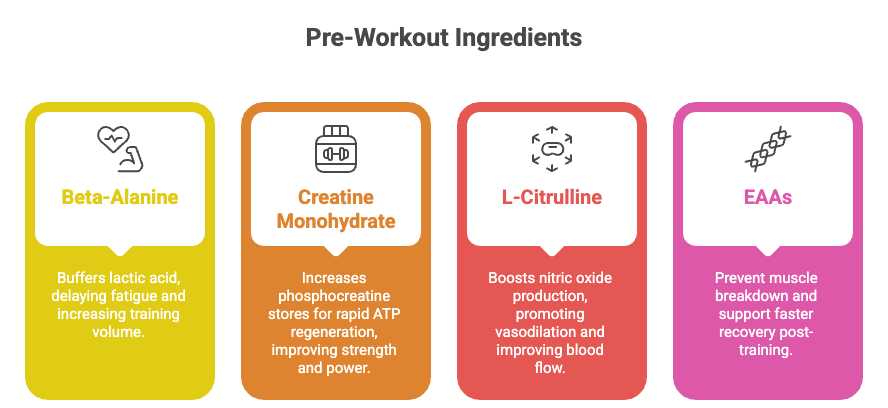
To truly appreciate the advantages of pre-workout supplements, it is important to understand the role of their key ingredients. Beyond caffeine, these compounds work together to elevate your training capacity in distinct and complementary ways.
Beta-Alanine is a non-essential amino acid famous for causing a harmless tingling sensation known as paresthesia. It helps buffer lactic acid accumulation in the muscles, significantly delaying the onset of muscular fatigue during high-intensity exercise. Research confirms that consistent beta-alanine supplementation at doses of 4 to 6 grams per day can meaningfully increase training volume and time to exhaustion [3]. You can find pure Beta Alanine at Muscle Plus to add to your stack.
Creatine Monohydrate is a staple in sports nutrition and one of the most extensively studied ergogenic aids in existence. It increases the body’s stores of phosphocreatine, which is used to rapidly regenerate ATP (energy) during short bursts of intense activity. This leads to improved strength, power output, and muscle volume over time.
L-Citrulline is included in most pre-workouts to boost nitric oxide production. This promotes vasodilation, widening blood vessels to increase blood flow to working muscles. The result is the highly sought-after “pump” and improved delivery of oxygen and nutrients during exercise, which can enhance both performance and recovery.
Branched-Chain Amino Acids (BCAAs), comprising leucine, isoleucine, and valine, help prevent muscle breakdown during prolonged workouts and support faster recovery post-training. Explore the full range of amino acids available at Muscle Plus to complement your pre-workout strategy.
Pre-Workout for Different Training Goals
The benefits of a pre-workout supplement are not uniform across all types of training. For strength training, the combination of creatine, beta-alanine, and a high, consistent caffeine dose supports consistent power output, repeated efforts, and the mental drive needed during heavy or technical lifts. For athletes following a progressive overload program, a pre-workout is often the preferred training aid.
For cardio and endurance training, coffee is often sufficient for casual sessions, but for competitive endurance athletes or those engaging in long-duration high-intensity efforts, the additional ingredients in a pre-workout can help sustain intensity and delay fatigue. For HIIT and circuit training, pre-workout offers a clear advantage, as its combination of stimulants and performance-supporting compounds helps sustain output across repeated bursts of effort.
Pre-Workout vs Coffee: Which Should You Choose?
The decision between pre-workout vs coffee ultimately depends on your specific fitness goals, the intensity of your training, and your individual tolerance to stimulants. There is no one-size-fits-all answer, but understanding the context of your workouts can guide you toward the optimal choice. For a deeper dive into optimizing your supplement routine, check out our guide on 5 Common Supplement Mistakes Beginners Make.
When to Choose Coffee
Coffee is an excellent choice for individuals who prefer a minimalist approach to their pre-workout nutrition. It is ideal for early morning cardio sessions, light resistance training, or active recovery days where extreme physical exertion is not the primary focus. If you are sensitive to high doses of caffeine or the tingling sensation caused by beta-alanine, coffee provides a gentler alternative that still delivers a noticeable improvement in alertness and focus.
Additionally, coffee is a practical option for those on a tight budget or individuals who want to limit their intake of artificial additives. It fits seamlessly into most daily routines and requires no special preparation beyond your usual morning brew. For many, the ritual of drinking coffee is a psychological trigger that signals the start of a productive day, including a successful workout.
When to Choose Pre-Workout
Pre-workout supplements shine in scenarios that demand peak physical performance and sustained intensity. If you are engaging in heavy lifting, powerlifting, CrossFit, or demanding endurance sports, the specialized ingredients in a pre-workout can significantly enhance your output. Products like the Elite Pre-Workout Stack are specifically formulated to support these rigorous demands.
Furthermore, pre-workouts are invaluable when you need a predictable and potent energy surge, especially after a long workday or during periods of low motivation. The precise dosing allows you to tailor your intake to match the intensity of your planned session. For gym owners looking to stock up on these high-demand products, our guide on Bulk Supplement Supply for Gyms Lebanon: 2026 offers valuable insights.
Morning vs Evening Workouts
Timing also plays a crucial role in the pre-workout vs coffee decision. For early-morning workouts, coffee often feels easier on the system and fits naturally into a wake-up routine. For late-afternoon or evening training, however, caffeine timing becomes more important. Consuming high-caffeine coffee later in the day may interfere with sleep quality, particularly for individuals who are sensitive to stimulants.
In these cases, a lower-dose or stimulant-free pre-workout can be a better option, providing the performance-enhancing benefits of amino acids and nitric oxide boosters without the sleep-disrupting effects of a large caffeine dose. Understanding your sleep schedule is just as important as understanding your training schedule when choosing between these two options.
The Concept of the “Caffeine Ceiling”
Recent research has shed light on an important phenomenon regarding caffeine consumption and exercise performance, often referred to as the “caffeine ceiling.” Studies suggest that while caffeine effectively enhances focus and reduces perceived exertion, there is a physiological limit to its ergogenic benefits. Once an individual reaches a certain threshold of caffeine intake, consuming additional stimulants does not yield further improvements in performance or body composition [4].
This is particularly relevant for individuals who already consume high amounts of caffeine throughout the day. If you are a heavy coffee drinker, adding a high-stimulant pre-workout on top of your daily intake may not provide the dramatic performance boost you expect. Instead, it could lead to negative side effects like jitters, anxiety, and disrupted sleep. Understanding your baseline caffeine tolerance is crucial for effectively utilizing either coffee or pre-workout supplements.
Managing Caffeine Tolerance and Cycling
To maintain the effectiveness of your chosen pre-workout fuel, it is important to manage your caffeine tolerance. Over time, the body adapts to regular caffeine intake, requiring higher doses to achieve the same energizing effects. This can lead to a cycle of escalating consumption that ultimately diminishes performance benefits and increases the risk of adverse side effects.
One effective strategy is to implement caffeine cycling, which involves periodically reducing or eliminating caffeine intake for a short period, typically one to two weeks. This allows your adenosine receptors to reset, restoring your sensitivity to the stimulant. During this time, you might opt for a non-stimulant pre-workout formula that focuses on pump and endurance ingredients without central nervous system stimulation. This approach ensures that when you do use caffeine, it delivers maximum impact.
Integrating Pre-Workout and Protein for Optimal Results
While the pre-workout vs coffee debate focuses on energy and performance during the session, it is equally important to consider your overall nutritional strategy, particularly regarding protein intake. Fueling your body correctly before and after training is essential for muscle growth, recovery, and long-term progress. Combining a solid pre-workout strategy with optimal protein timing can significantly amplify your results.
For instance, consuming a high-quality protein powder alongside or shortly after your pre-workout routine ensures that your muscles have the necessary building blocks to repair and grow following intense exertion. Understanding the nuances of different protein types is crucial; our detailed comparison on Whey Concentrate vs Isolate: Which Protein Wins in 2026? can help you make the best choice for your goals.
Timing Your Nutrition for Maximum Impact
The timing of your pre-workout and protein intake can profoundly influence your training outcomes. Generally, it is recommended to consume your pre-workout supplement or coffee approximately 30 to 45 minutes before exercising. This allows sufficient time for the caffeine and other active ingredients to be absorbed into the bloodstream and reach peak concentration just as you begin your most demanding exercises.
When it comes to protein, the strategy can vary based on your meal schedule. If you are training in a fasted state, a light protein shake before your workout can help prevent muscle breakdown. Conversely, if you have eaten a balanced meal a few hours prior, focusing on post-workout protein is often more effective. For a comprehensive look at this topic, read our guide on the Best Time to Take a Protein Shake: The Ultimate 2026 Science-Backed Guide.
Understanding Your Daily Protein Needs
Optimizing your pre-workout fuel is only one piece of the performance puzzle. Ensuring you consume adequate protein throughout the day is equally important for muscle repair, growth, and overall athletic development. Many athletes underestimate their daily protein requirements, which can significantly limit their progress regardless of how well they time their pre-workout intake.
Our comprehensive guide on How Much Protein Per Day Do You Need? 2026 Guide provides a science-backed framework for calculating your individual protein needs based on your body weight, training intensity, and fitness goals. Combining this knowledge with a smart pre-workout strategy creates a powerful foundation for consistent, measurable progress.
Potential Side Effects and Safety Considerations
Both coffee and pre-workout supplements are generally safe for healthy adults when consumed responsibly, but they are not without potential side effects. The most common issues arise from excessive caffeine intake, which can lead to a rapid heart rate, elevated blood pressure, anxiety, digestive distress, and insomnia. It is crucial to monitor your total daily caffeine consumption from all sources to avoid these negative outcomes.
Side Effects of Coffee
While coffee is largely considered a safe beverage for most people, it is possible to have too much of a good thing. The acidity of coffee can cause gastrointestinal upset, particularly when consumed on an empty stomach. Individuals prone to anxiety may find that even moderate coffee consumption exacerbates their symptoms. Additionally, the natural diuretic effect of caffeine means that heavy coffee consumption without adequate water intake can contribute to dehydration during exercise.
Side Effects of Pre-Workout Supplements
Pre-workout supplements carry additional considerations due to their multi-ingredient nature. The high doses of beta-alanine can cause an uncomfortable, though harmless, tingling sensation. Furthermore, some individuals may be sensitive to artificial sweeteners, dyes, or specific herbal extracts included in proprietary blends. Always read the ingredient label carefully and start with a half-serving to assess your tolerance before consuming a full dose.
A study published in Nutrients found that over 54% of regular pre-workout users reported experiencing at least one side effect, including nausea, rapid heart rate, and skin rashes, most commonly associated with consuming more than the recommended serving size [5]. Sticking to the manufacturer’s recommended dosage is the most effective way to minimize these risks.
Choosing Quality Supplements in Lebanon
When opting for pre-workout supplements, quality and authenticity are paramount. The supplement market can be difficult to navigate, with varying standards of manufacturing and ingredient transparency. It is essential to purchase products from reputable brands and trusted distributors to ensure you are consuming safe and effective formulas.
For fitness enthusiasts in Lebanon, Muscle Plus stands as a premier destination for authentic, high-quality sports nutrition. As the exclusive distributor of Scitec Nutrition, we guarantee the integrity of every product we sell. Whether you are a beginner exploring the Best Gym Supplements for Beginners in Lebanon: 2026 Guide or a gym owner seeking Wholesale Supplements Lebanon: The Complete 2026 Guide, ensuring product quality is the first step toward achieving your fitness goals safely. Browse our full range of Prepare Before Training supplements to find the right pre-workout for your needs.
Frequently Asked Questions (FAQs)
Is it better to drink coffee or pre-workout?
The better choice depends entirely on your training goals and intensity. Coffee is excellent for natural, moderate energy suited for light cardio or general alertness. Pre-workout is superior for high-intensity training, heavy lifting, and endurance sports, as it contains specialized ingredients like beta-alanine and citrulline that actively enhance muscle performance and delay fatigue beyond what caffeine alone can achieve.
Can coffee replace pre-workout?
Yes, coffee can replace pre-workout if your primary goal is simply to obtain a caffeine boost for increased alertness and energy. However, coffee cannot replace the specific performance-enhancing benefits of the additional amino acids and nitric oxide boosters found in formulated pre-workout supplements. If you rely on those specific compounds for muscle pumps and endurance, coffee will fall short as a complete replacement.
How much coffee equals one scoop of pre-workout?
A typical scoop of pre-workout contains between 150 to 300 milligrams of caffeine. An average eight-ounce cup of brewed coffee contains roughly 80 to 100 milligrams of caffeine. Therefore, you would need to drink approximately one and a half to three cups of coffee to equal the caffeine content found in a single serving of most standard pre-workout supplements.
Can I mix coffee and pre-workout together?
Mixing coffee and pre-workout is generally not recommended due to the high risk of overconsuming caffeine. Stacking these two powerful stimulants can easily push you past the recommended daily limit of 400 milligrams, leading to severe jitters, rapid heartbeat, anxiety, and insomnia. If you choose to consume both in the same day, it is crucial to space them several hours apart to manage your total stimulant load safely.
Conclusion
The debate between pre-workout vs coffee is not about declaring a universal winner, but rather understanding which tool is best suited for your specific fitness journey. Coffee offers a natural, accessible, and antioxidant-rich energy boost that is perfect for moderate exercise and daily vitality. On the other hand, pre-workout supplements provide a targeted, scientifically formulated arsenal of ingredients designed to push your physical limits, enhance muscle endurance, and maximize your training output.
By evaluating your workout intensity, individual caffeine tolerance, and overall fitness objectives, you can strategically incorporate either coffee or a high-quality pre-workout into your routine. Remember that supplements are designed to complement a solid foundation of nutrition and consistent training. For personalized guidance, do not hesitate to contact us at Muscle Plus, where our certified sports nutritionists are ready to help you build the perfect supplement stack.
Explore the wide range of authentic products available at Muscle Plus, and take the next step toward achieving your ultimate fitness potential in 2026. Browse our complete selection of pre-workout supplements and discover the Scitec Nutrition difference today.
References
[1] Guest NS, VanDusseldorp TA, Nelson MT, et al. International society of sports nutrition position stand: caffeine and exercise performance. J Int Soc Sports Nutr. 2021;18(1):1. https://pmc.ncbi.nlm.nih.gov/articles/PMC7777221/
[2] Poole R, Kennedy OJ, Roderick P, et al. Coffee consumption and health: umbrella review of meta-analyses of multiple health outcomes. BMJ. 2017;359:j5024. https://www.bmj.com/content/359/bmj.j5024
[3] Hobson RM, Saunders B, Ball G, Harris RC, Sale C. Effects of β-alanine supplementation on exercise performance: a meta-analysis. Amino Acids. 2012;43(1):25–37. https://pubmed.ncbi.nlm.nih.gov/22270875/
[4] Pre-workout multi-ingredients or carbohydrate alone promote similar resistance training benefits in middle-aged individuals. PMC. 2025. https://pmc.ncbi.nlm.nih.gov/articles/PMC12168407/
[5] Jagim AR, Harty PS, Camic CL. Common habits, adverse events, and opinions regarding pre-workout supplement use among regular consumers. Nutrients. 2019;11(4):855. https://pubmed.ncbi.nlm.nih.gov/30979063/