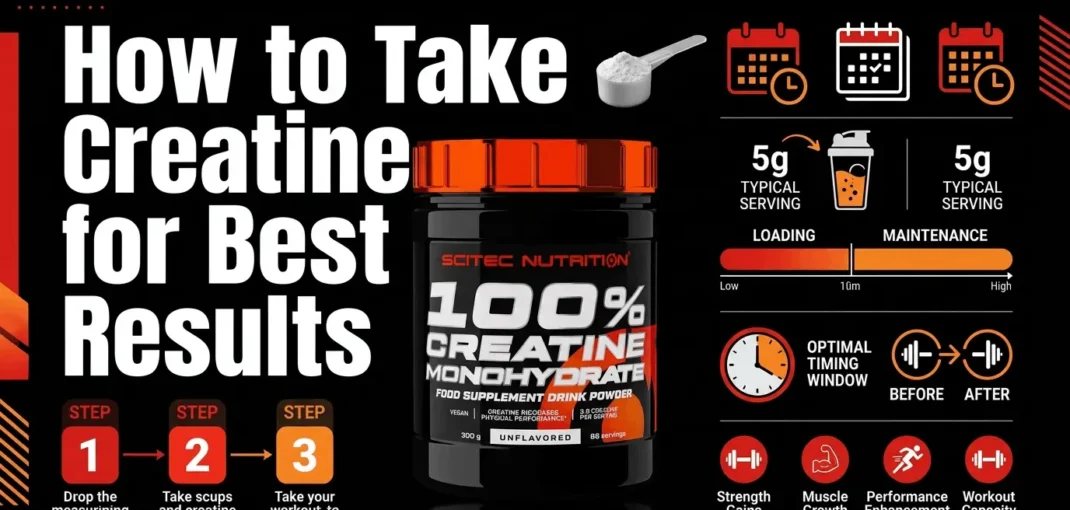
Are you putting in the hard work at the gym but feeling like your strength gains have plateaued? You might be wondering how to take creatine for best results to finally break through that barrier. As one of the most researched and scientifically validated sports supplements on the market, creatine monohydrate is a game-changer for athletes and beginners alike.
However, the sheer volume of conflicting advice online about creatine dosage, loading phases, and the best time to take creatine can be overwhelming. Some sources insist you must load it, while others warn against it. Some say to take it before your workout, while others swear by post-workout timing.
In this comprehensive guide, we will cut through the noise and provide a clear, evidence-based roadmap. We will explore exactly how to optimize your creatine intake, whether you are a seasoned bodybuilder or a fitness beginner in Lebanon looking to enhance your performance. By the end of this article, you will have a precise protocol to maximize your muscle saturation and achieve the best possible results.
Understanding Creatine and How It Works
Before diving into the specifics of dosage and timing, it is crucial to understand what creatine is and how it functions within the body. Creatine is a naturally occurring compound synthesized from three amino acids: arginine, glycine, and methionine. It is primarily stored in skeletal muscle tissue in the form of phosphocreatine.
When you engage in high-intensity exercise, such as heavy resistance training or sprinting, your muscles rely on adenosine triphosphate (ATP) for immediate energy. As ATP is depleted, your body uses stored phosphocreatine to rapidly regenerate it. By supplementing with creatine monohydrate, you increase your intramuscular creatine stores. This enhanced reserve allows your body to produce ATP more efficiently, directly translating to increased power output, improved muscle endurance, and greater overall strength gains, as established by the International Society of Sports Nutrition position stand on creatine.
The Importance of Muscle Saturation
The ultimate goal of creatine supplementation is to achieve full muscle saturation. Your muscles have a maximum capacity for storing creatine. Once this threshold is reached, any excess creatine is simply excreted by the kidneys. Therefore, the question of how to take creatine for best results is essentially a question of how to reach and maintain this saturation point most effectively.
There are two primary methods to achieve muscle saturation: the loading phase method and the daily low-dose maintenance method. Both approaches are effective, but they differ in speed and potential side effects.
The Creatine Loading Phase vs. No Loading
When starting your supplementation journey, you must choose between a rapid loading phase or a slower, steady approach. Understanding the pros and cons of each will help you decide which method aligns best with your goals and tolerance.
How to Do a Creatine Loading Phase
A creatine loading phase is designed to rapidly maximize your intramuscular creatine stores. This method typically involves consuming a high dose of creatine for a short period, followed by a lower maintenance dose.
According to research on common questions and misconceptions about creatine supplementation published in the Journal of the International Society of Sports Nutrition, a standard loading protocol involves taking 20 to 25 grams of creatine per day, divided into four or five equal doses of 5 grams, for a duration of 5 to 7 days. This rapid influx of creatine saturates the muscles quickly, allowing you to experience the performance-enhancing benefits within a week.
After the initial 5 to 7 days, you transition to a maintenance dose of 3 to 5 grams per day to keep your stores elevated.
Pros of Loading: * Rapid muscle saturation (within 5-7 days) * Faster noticeable improvements in strength and performance * Quick increase in intracellular water volume, making muscles appear fuller
Cons of Loading: * Higher risk of gastrointestinal discomfort or bloating * Requires remembering to take multiple doses throughout the day * Temporary rapid weight gain due to water retention
The Low-Dose Daily Maintenance Method
If the idea of consuming 20 grams of creatine a day sounds unappealing, the low-dose daily method is an equally effective, albeit slower, alternative. This approach involves skipping the loading phase entirely and simply taking a consistent maintenance dose from day one.
Research by Hultman et al. on muscle creatine loading in men indicates that taking 3 to 5 grams of creatine daily will eventually lead to the same level of muscle saturation as a loading phase. The key difference is the timeline. It typically takes about 3 to 4 weeks of consistent daily supplementation to fully saturate your muscles using this method.
For many beginners, especially those prone to stomach upset, this is the preferred route. It is simple, sustainable, and minimizes the risk of side effects. If you are looking for a high-quality option to start your routine, consider Creatine Monohydrate by Scitec Nutrition, available at Muscle Plus.
Pros of the Low-Dose Method: * Minimal risk of gastrointestinal issues * Simple and convenient (only one dose per day) * Avoids sudden spikes in water retention
Cons of the Low-Dose Method: * Takes longer (3-4 weeks) to experience the full performance benefits * Requires strict consistency over a longer period to reach saturation
Dosage Comparison Table
To help you visualize the difference between the two methods, here is a clear comparison of the protocols:
| Phase | Loading Method Protocol | Low-Dose Method Protocol |
| Initial Phase (Days 1-7) | 20-25g daily (split into 4-5 doses) | 3-5g daily (single dose) |
| Maintenance Phase (Day 8+) | 3-5g daily | 3-5g daily |
| Time to Full Saturation | 5 to 7 days | 21 to 28 days |
| Risk of Bloating/GI Issues | Moderate to High | Very Low |
When to Take Creatine: Timing for Optimal Absorption
Once you have decided on your dosage strategy, the next common question is about timing. Does it matter when you take your creatine? The science on creatine timing is nuanced, but it offers some practical guidelines for maximizing absorption.
Creatine Before or After Workout?
The debate over whether to take creatine pre-workout or post-workout is ongoing. Some athletes prefer taking it before training to ensure their ATP stores are primed for the session. However, the current body of research leans slightly in favor of post-workout supplementation.
A study by Antonio and Ciccone comparing pre- versus post-workout creatine ingestion found that taking creatine immediately after resistance training resulted in superior gains in lean muscle mass and strength compared to taking it beforehand. The rationale is that after an intense workout, your muscles are highly sensitized to nutrient uptake. Blood flow to the muscles is elevated, facilitating the efficient transport of creatine into the cells.
While the post-workout window may offer a slight edge, the most critical factor remains consistency. Taking your creatine every day is far more important than the specific hour you consume it. If you prefer to mix your creatine into your pre-workout drink, you will still reap the vast majority of the benefits. For more insights on pre-workout strategies, check out our guide on What Do Pre Workout Supplements Do?.
Taking Creatine on Rest Days
A common mistake among beginners is assuming that creatine is only necessary on training days. This is a misconception. To maintain muscle saturation, you must take your maintenance dose every single day, including rest days.
On rest days, the timing of your creatine intake is entirely flexible. You can take it in the morning, with lunch, or in the evening. The goal is simply to keep your intramuscular stores topped up. Many people find it easiest to incorporate their rest-day dose into their morning routine to ensure they don’t forget it.
Mixing Creatine with Carbohydrates and Protein
To further optimize the absorption of your creatine supplement, consider what you are mixing it with. Research by Steenge et al. on protein- and carbohydrate-induced augmentation of creatine retention suggests that consuming creatine alongside carbohydrates, or a combination of carbohydrates and protein, can significantly enhance its uptake into the muscles.
This enhanced absorption is driven by insulin. When you consume carbohydrates, your body releases insulin, which acts as a shuttle, driving nutrients—including creatine—into your muscle cells. Therefore, taking your creatine with a meal or mixing it into a post-workout shake containing both carbs and protein is an excellent strategy.
For instance, mixing your daily dose of creatine into a high-quality whey protein shake, such as those found in our Protein Powder Category, provides an ideal environment for recovery and absorption. You can learn more about optimizing your protein intake in our comprehensive guide on the Best Time to Take a Protein Shake.
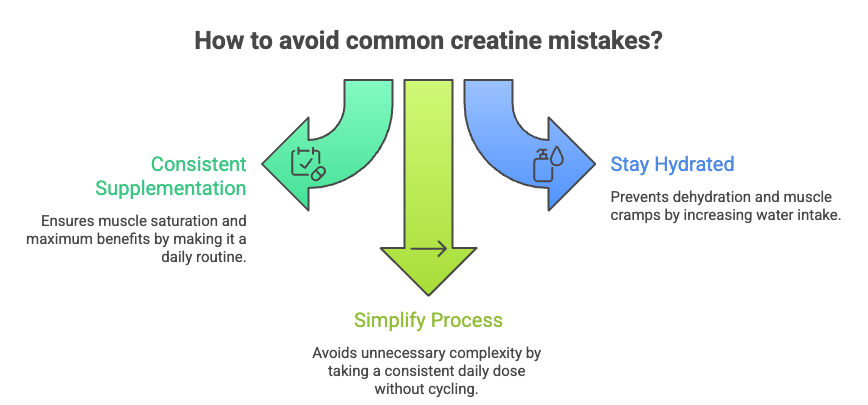
Common Creatine Mistakes to Avoid
Even with a solid understanding of dosage and timing, it is easy to make errors that hinder your progress. Avoiding these common pitfalls will ensure you get the most out of your supplementation.
1. Inconsistent Supplementation
The most significant mistake you can make with creatine is inconsistency. Creatine relies on cumulative saturation. If you take it sporadically—only on workout days or whenever you remember—your muscle stores will never reach their maximum capacity, and you will miss out on the full benefits. Make it a non-negotiable part of your daily routine.
2. Under-Hydrating
Creatine draws water into your muscle cells, a process known as cell volumization. This is a positive effect that contributes to muscle growth and performance. However, it also means your overall fluid requirements increase. Failing to drink enough water while taking creatine can lead to dehydration, muscle cramps, and diminished performance. Ensure you are consuming ample water throughout the day, especially in warmer climates like Lebanon.
3. Overcomplicating the Process
Many beginners get bogged down in the minutiae of creatine supplementation, worrying excessively about exact timing or complex cycling protocols. The truth is, creatine cycling (taking it for a few weeks, then stopping) is entirely unnecessary. As demonstrated by Kreider et al. in their long-term creatine supplementation safety study, your body does not build a tolerance to creatine, and continuous use is safe and effective. Keep it simple: take 3 to 5 grams every day, stay hydrated, and train hard. For more advice on avoiding beginner errors, read our article on 5 Common Supplement Mistakes Beginners Make.
Best Practices for Beginners in Lebanon
If you are just starting your fitness journey in Lebanon, integrating creatine into your routine can provide a significant boost. Here are a few tailored tips to help you succeed:
- Start Simple: If you are new to supplements, skip the loading phase. Begin with a steady 3 to 5 grams per day to allow your body to adjust without any gastrointestinal discomfort.
- Pair with a Solid Diet: Creatine is a supplement, not a replacement for proper nutrition. Ensure you are consuming adequate protein and calories to support your training goals. Use our Protein Calculator to determine your baseline needs.
- Choose Quality: Not all creatine is created equal. Opt for a pure, micronized creatine monohydrate from a reputable brand to ensure maximum solubility and absorption. Explore our Strength & Endurance Category for top-tier options.
- Stay Consistent During Cuts: If you are entering a fat-loss phase, do not stop taking creatine. It is highly effective at preserving lean muscle mass while you are in a calorie deficit. For more details on fat loss strategies, refer to The Ultimate Guide to Cutting.
If you are unsure about which supplements are right for your specific goals, our team at Muscle Plus is here to help. Feel free to Contact Us for personalized advice.
Frequently Asked Questions (FAQ)
What is the best way to take creatine for beginners?
For beginners, the best approach is the daily low-dose method. Take 3 to 5 grams of creatine monohydrate every day. This method avoids the potential stomach discomfort associated with a loading phase while still fully saturating your muscles within 3 to 4 weeks.
Should I take creatine before or after my workout?
While you can take creatine at any time, research suggests that taking it post-workout may offer a slight advantage for muscle growth and strength gains. Mixing it with your post-workout protein and carbohydrate shake can further enhance absorption.
Do I need to do a creatine loading phase?
No, a loading phase is not strictly necessary. It is simply a method to achieve muscle saturation faster (in 5-7 days). Taking a consistent maintenance dose of 3-5 grams daily will achieve the exact same level of saturation, it will just take slightly longer (3-4 weeks).
Does creatine cause water retention and weight gain?
Yes, creatine causes water retention, but it is primarily intracellular—meaning the water is drawn inside the muscle cells, making them look fuller and more pumped. This can lead to a slight increase in scale weight (usually 1-3 lbs), but it is water weight, not fat gain.
Can I mix creatine with my protein shake?
Absolutely. Mixing creatine with a protein shake is highly recommended. The amino acids in the protein, especially if combined with carbohydrates, stimulate an insulin response that helps shuttle the creatine more efficiently into your muscle cells.
Is it safe to take creatine every day?
Yes, extensive research has demonstrated that long-term, daily supplementation with creatine monohydrate is safe for healthy adults. There is no need to cycle off creatine; consistent daily use is the most effective way to maintain muscle saturation.
Conclusion
Understanding how to take creatine for best results does not need to be complicated. The science is clear: consistency is the ultimate key to success. Whether you choose to accelerate the process with a loading phase or take a steady daily approach, the end result is the same—fully saturated muscles ready to perform at their peak.
By taking 3 to 5 grams daily, prioritizing post-workout timing when possible, and ensuring adequate hydration, you will create the optimal environment for strength gains and muscle growth. Remember, supplements work best when paired with intense training and solid nutrition.
Ready to elevate your performance? Explore our premium selection of Creatine Monohydrate and other essential Best Gym Supplements for Beginners at Muscle Plus, your trusted source for authentic Scitec Nutrition products in Lebanon.