Have you ever stepped into the gym, taken a scoop of your favorite pre-workout, and within minutes felt a distinct, tingling sensation washing over your skin? If you are familiar with this feeling, you have already experienced the immediate effects of one of the most heavily researched supplements in the fitness industry. This brings us to the core question: what is beta-alanine and what does it do?
In the rapidly evolving world of sports nutrition, separating marketing hype from scientific reality can be challenging. However, beta-alanine stands out as a proven ergogenic aid. It is not just another ingredient thrown into a proprietary blend; it is a fundamental building block for athletic endurance. Whether you are a professional bodybuilder aiming for maximum hypertrophy, a CrossFit athlete pushing through a grueling workout of the day, or an everyday gym-goer in Lebanon looking to optimize your training, understanding this amino acid is critical to your success.
This comprehensive guide will explore the deep science behind beta-alanine. We will dissect exactly what it is, how it operates on a cellular level within your muscles, and the multitude of benefits it offers. Furthermore, we will break down the optimal dosing strategies, address the famous “tingle” side effect, and explain how to stack it with other supplements for maximum results. By the end of this article, you will have a complete understanding of how to leverage beta-alanine to push past your previous limitations.
Understanding the Basics: What Is Beta-Alanine?
To truly grasp the impact of this supplement, we must start at the molecular level. Beta-alanine is a non-essential amino acid. In nutritional science, the term “non-essential” simply means that your body can produce it naturally; you do not strictly need to obtain it from your diet to survive. However, when it comes to maximizing athletic performance, natural production is often insufficient.
Unlike most amino acids, which serve as the building blocks for protein synthesis (muscle building), beta-alanine has a completely different structural and functional role. It does not chain together to form proteins. Instead, it serves a highly specific and critical function within skeletal muscle tissue.
Beta-alanine combines with another amino acid called histidine. Together, they form a powerful dipeptide molecule known as carnosine, as explained by Medical News Today. Carnosine is then stored primarily in your fast-twitch muscle fibers—the very fibers responsible for explosive power and high-intensity movements.
While you can consume beta-alanine through dietary sources, primarily animal proteins like meat, poultry, and fish, the quantities are relatively small. For athletes looking to saturate their muscles with carnosine, relying solely on diet is impractical. This is exactly why targeted supplementation with high-quality products like Beta Alanine has become a cornerstone of modern sports nutrition.
The Mechanism of Action: How Does Beta-Alanine Work?
To understand what beta-alanine does, you must understand the role of carnosine during intense physical exertion. The true magic of beta-alanine lies not in the amino acid itself, but in its ability to elevate muscle carnosine levels.
When you engage in high-intensity exercise—whether that is a heavy set of squats, a 400-meter sprint, or a high-intensity interval training (HIIT) session—your muscles require rapid energy. To meet this demand, your body breaks down glucose through a process called glycolysis.
The Problem: Muscle Acidosis and Lactic Acid
Glycolysis is highly efficient at producing energy quickly, but it comes with a significant byproduct: lactic acid. As lactic acid accumulates in your muscles, it quickly breaks down into lactate and releases hydrogen ions (H+).
These hydrogen ions are the true culprits behind muscle fatigue. As they flood your muscle cells, they cause the pH level to drop dramatically, creating a highly acidic environment, a process thoroughly documented by Examine.com. This localized acidity is what you feel as the intense “burn” during a strenuous set. More importantly, this acidic environment physically inhibits your muscles’ ability to contract and disrupts the breakdown of glucose, ultimately forcing you to stop exercising.
The Solution: Carnosine as an Intracellular Buffer
This is where carnosine becomes your greatest ally. Carnosine acts as an intracellular buffer against this acid, essentially acting like a sponge, soaking up the excess hydrogen ions as they are produced. By neutralizing the acidity, carnosine stabilizes the pH level within the muscle cell.
The critical bottleneck in this process is beta-alanine. Your body typically has plenty of histidine available, but beta-alanine levels are naturally low. Therefore, beta-alanine is the rate-limiting factor for carnosine synthesis. By supplementing with beta-alanine, you provide your body with the necessary raw materials to drastically increase carnosine production. Studies published in the Journal of the International Society of Sports Nutrition have shown that consistent supplementation can elevate muscle carnosine levels by up to 80%.
By effectively buffering the acid, beta-alanine delays the onset of fatigue, allowing you to push harder, lift heavier, and train longer before reaching failure.
The Proven Benefits of Beta-Alanine for Athletes
The ergogenic (performance-enhancing) effects of beta-alanine are supported by a robust body of scientific literature. Here is a detailed look at what beta-alanine can do for your athletic performance:
1. Significantly Increases Time to Exhaustion (TTE)
Perhaps the most well-documented benefit of beta-alanine is its ability to increase your time to exhaustion (TTE). This metric measures how long you can sustain a specific exercise intensity before fatigue forces you to stop.
By buffering hydrogen ions and delaying muscle acidosis, beta-alanine allows you to extend your working sets. Research reviewed by Examine.com has consistently demonstrated that athletes supplementing with beta-alanine can exercise for longer periods at high intensities compared to those taking a placebo. Whether you are trying to squeeze out an extra two reps on the bench press or maintain your pace in the final stretch of a race, beta-alanine provides the endurance needed to cross the finish line.
2. Optimizes High-Intensity Interval Training (HIIT)
Beta-alanine is highly specific in its application. It is most effective for exercises lasting between one to ten minutes. This specific timeframe aligns perfectly with the energy systems that produce the most lactic acid.
Consequently, beta-alanine is an exceptional supplement for athletes engaged in high-intensity interval training (HIIT). During HIIT, you perform short, maximal-effort bursts followed by brief recovery periods. As Healthline notes, beta-alanine helps clear the acid buildup during those intense bursts, allowing you to maintain peak performance across multiple intervals without suffering a dramatic drop in power output.
3. Enhances Muscular Endurance and Training Volume
In the realm of resistance training, total volume (sets × reps × weight) is a primary driver of muscle hypertrophy (growth). Because beta-alanine delays fatigue, it directly enables you to perform more work during a single training session.
If you normally fail at 8 reps with a given weight, beta-alanine may help you reach 10 or 11 reps. Over weeks and months of training, this increased volume translates to greater mechanical tension and metabolic stress on the muscle fibers, ultimately leading to superior gains in both size and strength. If you are serious about maximizing your workouts, ensuring beta-alanine is part of your Prepare Before Training protocol is essential.
4. Offers Antioxidant and Anti-Aging Properties
While its performance benefits are the main draw, carnosine also possesses significant antioxidant properties. Intense exercise naturally generates free radicals, which can cause oxidative stress and cellular damage. According to Medical News Today, carnosine helps neutralize these free radicals, potentially reducing exercise-induced muscle damage and accelerating recovery.
Furthermore, emerging research highlighted by Examine.com suggests that carnosine may have anti-aging benefits and support overall cardiovascular and neurological health, making it a multifaceted compound for long-term wellness.
Optimal Dosage Strategies: How Much Beta-Alanine Do You Need?
To fully harness the power of beta-alanine, you must approach supplementation strategically. Unlike caffeine, which provides an acute, immediate effect, beta-alanine operates on an accumulation model. Taking a single large dose right before a workout will not magically improve your performance that day.
The Loading Phase
The goal of beta-alanine supplementation is to saturate your muscle carnosine stores. This requires consistent, daily intake over an extended period. The International Society of Sports Nutrition’s position stand recommends a standard daily dosage of 3.2 to 6.4 grams per day.
To achieve optimal carnosine saturation, you should undergo a loading phase. This involves taking the recommended daily dose consistently for at least 4 to 6 weeks. Research indicates that this protocol can increase muscle carnosine levels by 40% to 60%. Continuing supplementation for up to 10 weeks can yield even greater increases.
Maintenance and Timing
Once you have completed the loading phase and your carnosine levels are elevated, you must continue taking a maintenance dose to keep them high. If you stop supplementing, your carnosine levels will gradually return to baseline over several weeks.
Regarding timing, because beta-alanine works through accumulation, it does not strictly need to be taken pre-workout. You can take it at any time of the day. However, Examine.com notes that some evidence suggests taking beta-alanine alongside a meal containing carbohydrates and protein may enhance its uptake into the muscle cells due to the insulin response.
Addressing the “Tingle”: Understanding Paresthesia
If you have ever consumed a full dose of beta-alanine at once, you are undoubtedly familiar with the famous “tingle.” This sensation, scientifically known as paresthesia, is the most common side effect associated with beta-alanine supplementation.
What Causes Paresthesia?
Paresthesia typically manifests as a prickling, itching, or tingling sensation on the skin, most commonly felt on the face, neck, shoulders, and the back of the hands. It usually begins within 15 to 30 minutes of ingestion and subsides after about an hour.
This sensation occurs because beta-alanine can bind to and activate specific nerve receptors under the skin. It is crucial to understand that paresthesia is completely harmless. As Healthline confirms, it is not an allergic reaction, it is not dangerous, and it does not indicate toxicity.
How to Minimize the Tingle
While some athletes enjoy the tingle and use it as a psychological cue that their pre-workout is “kicking in,” others find it uncomfortable. If you prefer to avoid the sensation, the solution is simple: divide your daily dose.
The intensity of paresthesia is dose-dependent. Taking a full 3.2-gram dose at once is highly likely to cause tingling. Examine.com recommends splitting your total daily requirement into smaller doses of 800 mg to 1.6 grams taken every 3 to 4 hours to effectively bypass the paresthesia while still achieving optimal carnosine loading. Alternatively, you can look for sustained-release formulations that gradually deliver the amino acid into your system.
Synergistic Stacking: Combining Beta-Alanine with Other Supplements
Beta-alanine is highly effective in isolation, but its true potential is unlocked when combined strategically with other proven supplements. Creating a synergistic “stack” can amplify your results exponentially.
Beta-Alanine and Creatine: The Ultimate Power Duo
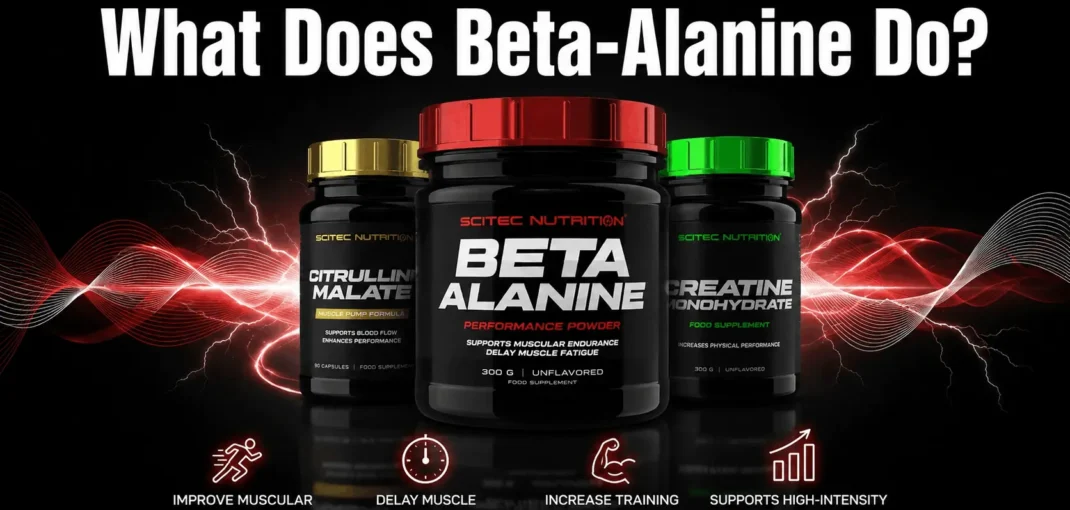
If there is one supplement that pairs perfectly with beta-alanine, it is creatine monohydrate. While they operate through entirely different mechanisms, their effects are highly complementary.
Beta-alanine acts as a buffer, delaying fatigue and increasing endurance. Creatine, on the other hand, increases the availability of adenosine triphosphate (ATP), the primary energy currency for explosive, high-intensity movements. When used together, creatine provides the immediate power to lift heavier weights, while beta-alanine provides the endurance to perform more reps with that heavier weight.
Medical News Today reports that numerous studies have demonstrated combining these two supplements leads to greater improvements in strength, lean muscle mass, and overall exercise performance than taking either one alone.
Integrating Beta-Alanine into Pre-Workouts
Because of its performance-enhancing properties, beta-alanine is a foundational ingredient in almost every high-quality pre-workout supplement on the market. Formulators combine it with ingredients like caffeine for energy, citrulline malate for increased blood flow and “pumps,” and BCAAs for muscle protection.
If you are looking for an all-in-one solution, consider comprehensive Pre-Workouts available at Muscle Plus. Products like Amino Charge or the explosive Hot Blood Hardcore provide clinical doses of beta-alanine alongside other synergistic compounds to maximize your training sessions.
For a deeper dive into choosing the right pre-training fuel, read our detailed analysis on Pre-Workout vs Coffee: Which Gives You the Ultimate Gym Edge in 2026?.
Conclusion: Is Beta-Alanine Right for You?
We have thoroughly answered the question: what is beta-alanine and what does it do? It is far more than just the ingredient that makes your skin tingle. It is a scientifically validated, highly effective amino acid that fundamentally alters how your muscles handle fatigue.
By acting as the rate-limiting precursor to carnosine, beta-alanine equips your muscles with a powerful intracellular buffer. It neutralizes the acid buildup that causes the burn, allowing you to train harder, sustain high-intensity efforts longer, and ultimately force your body to adapt and grow.
Whether your goal is to add lean muscle mass, improve your cardiovascular endurance, or simply get the most out of every gym session, beta-alanine deserves a permanent place in your supplement protocol. It requires consistency and a proper loading phase, but the results are undeniable.
Ready to elevate your performance? Explore our complete selection of authentic, premium-grade supplements, including standalone Beta Alanine and advanced pre-workout formulas, at Muscle Plus, Lebanon’s most trusted supplement store.
Frequently Asked Questions (FAQ)
What does beta-alanine do to your body?
Beta-alanine is a non-essential amino acid that combines with histidine in your body to produce carnosine. Carnosine is stored in your skeletal muscles and acts as a powerful buffer against lactic acid buildup during intense exercise. By neutralizing this acidity, beta-alanine effectively delays muscle fatigue and improves overall athletic endurance.
Should I take beta-alanine every day?
Yes, beta-alanine must be taken daily to be effective. It does not provide an immediate, acute effect like caffeine. Instead, it works by accumulating in your muscles over time. Consistent daily supplementation, even on your rest days, is required to achieve and maintain optimal muscle carnosine saturation.
Does beta-alanine build muscle?
Beta-alanine does not directly stimulate muscle protein synthesis in the way that whey protein does. However, it indirectly supports significant muscle growth. By buffering acid and delaying fatigue, it allows you to perform more repetitions and handle greater training volume. This increased workload provides the mechanical tension necessary to stimulate greater muscle hypertrophy over time.
Why does beta-alanine make you tingle?
The tingling sensation, known as paresthesia, is a common and completely harmless side effect. It occurs because beta-alanine binds to and activates specific nerve receptors located just beneath the skin. The sensation typically subsides within 60 to 90 minutes. If you find it uncomfortable, you can minimize the tingle by dividing your total daily intake into smaller doses taken throughout the day.
When is the best time to take beta-alanine?
Because beta-alanine operates on an accumulation model, the exact timing of ingestion is not critical for its performance benefits. You can take it at any time of the day that fits your schedule. However, taking it alongside a meal that contains carbohydrates and protein may slightly enhance its absorption into the muscle cells due to the natural insulin response.