Short answer: yes, if the shake helps you reach your daily protein target. Protein before sleep raises overnight muscle protein synthesis, and head-to-head trial data show casein and whey produce a similar overnight response. Casein is a practical slow-digesting option, not a magic switch.
That answer surprises people. Most supplement content says casein is the “night protein” and whey is the “day protein”. The research is more interesting than that, and more useful.
Below is what the trials measured, how the two proteins differ, how much to take, and what to check before buying.
What is casein protein?
Casein is the main protein in milk. It makes up roughly 80% of milk protein, while whey accounts for the rest (Boirie et al., 1997).
In the stomach, casein clots. That clot slows gastric emptying, so amino acids enter the bloodstream gradually instead of in one spike. In the same study, leucine from casein kept a steady, moderate rise for six to seven hours. Leucine from whey rose much higher and faster, but the peak was short-lived, lasting about four to five hours.
Casein is a complete protein. It supplies all nine essential amino acids the body cannot make, which makes it a high-quality source.
Most casein powders use micellar casein. Some formulas add calcium caseinate, because the two casein types behave slightly differently during digestion. Both are casein.
Casein vs whey: the real difference is digestion speed
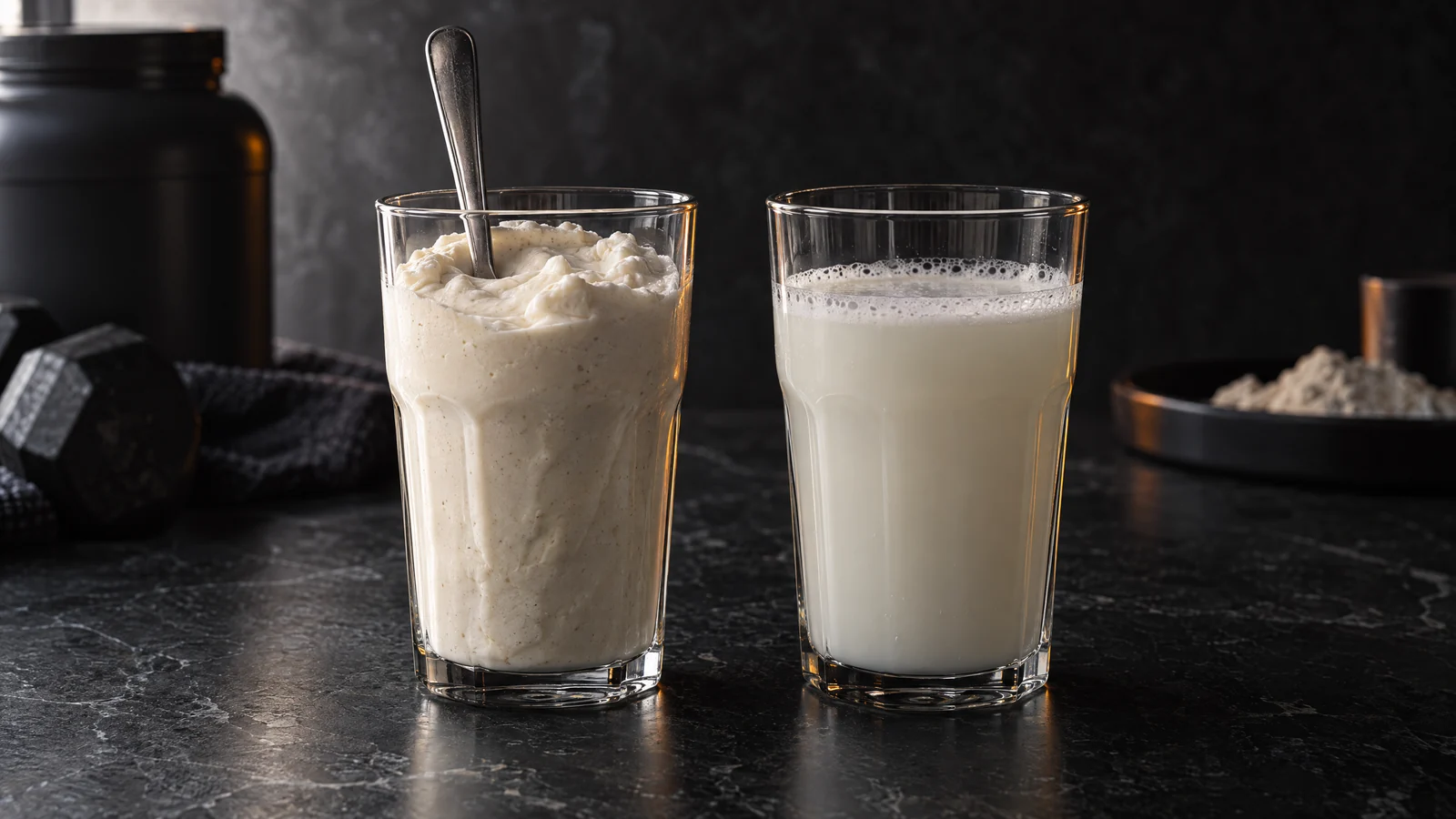
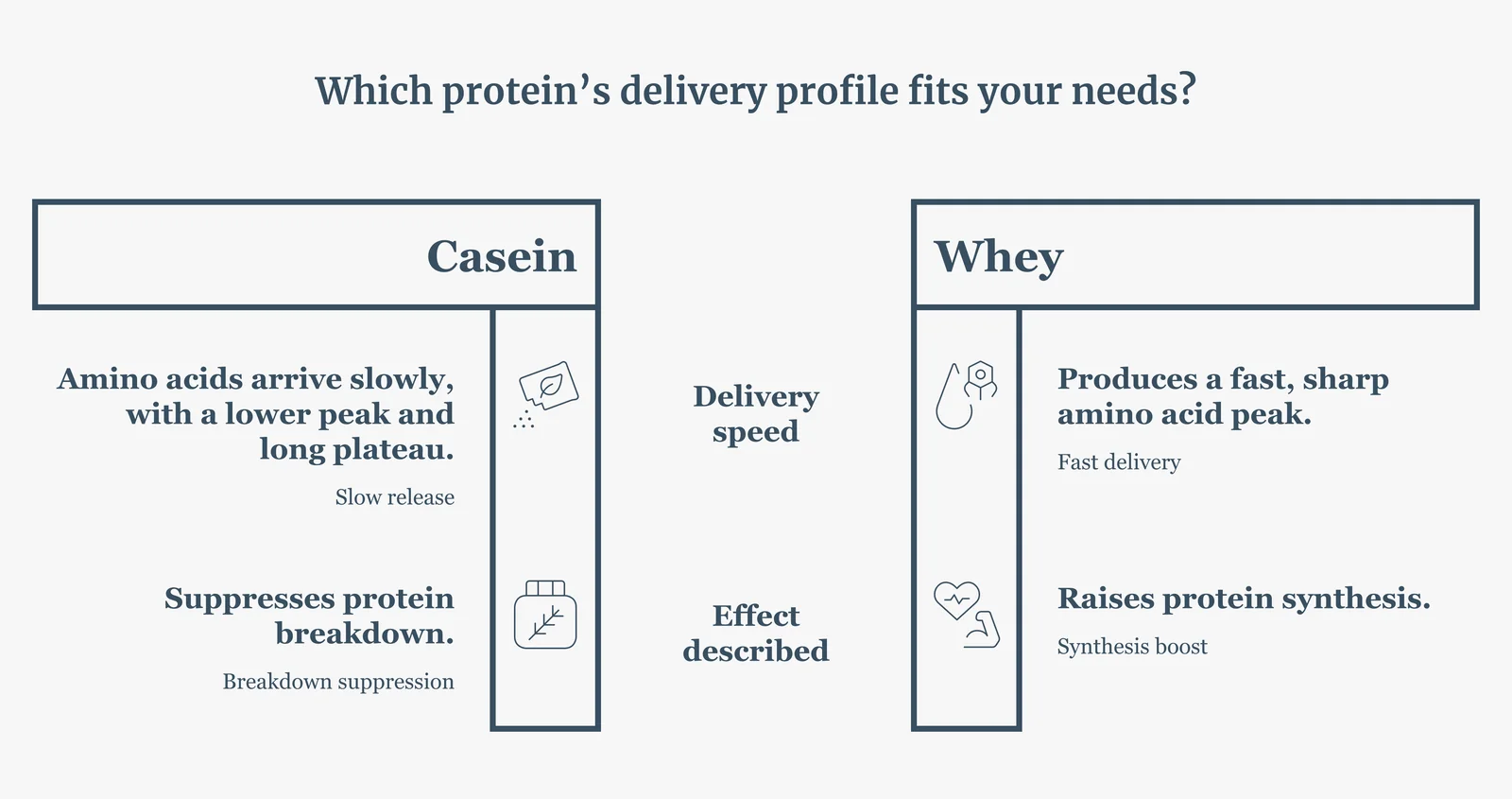
Whey is the fast protein. After a whey meal, blood amino acids rise sharply, protein synthesis climbs, and amino acid oxidation increases. Protein breakdown barely moves (Boirie et al., 1997).
Casein behaves differently. Its amino acid peak is lower, but it lasts longer. Synthesis rises modestly, while protein breakdown is clearly suppressed. The net effect over several hours was a more positive leucine balance than whey produced in the same study.
That is the whole “slow versus fast” story, and it is real. What it does not prove is that casein builds more muscle overnight.
| Feature | Whey | Casein |
|---|---|---|
| Share of milk protein | About 20% | About 80% |
| Digestion | Fast | Slow, forms a clot |
| Blood amino acids | Sharp peak, short duration | Lower peak, long plateau |
| Main metabolic effect | Raises protein synthesis | Suppresses protein breakdown |
| Leucine content | About 11% | About 8% |
| Practical fit | Around training | Long gaps between meals |
Both are dairy proteins with complete amino acid profiles. The difference is timing of delivery, not quality. If you are comparing whey types specifically, our guide to whey concentrate vs isolate explains how filtration changes protein per serving.
Is casein before bed worth it? What the research shows
Overnight muscle protein synthesis: what the trials measured
The foundational trial gave 16 young men 40 g of casein 30 minutes before sleep, after an evening resistance session. Casein was digested and absorbed during sleep, whole-body protein synthesis rose, and net protein balance moved from negative to positive. Mixed muscle protein synthesis was about 22% higher than placebo, a result that sat right on the edge of statistical significance (Res et al., 2012).
A 12-week training study then tested the practical version. Forty-four young men took 27.5 g of protein before sleep every night. The supplement delivered more muscle mass and strength than a placebo (Snijders et al., 2015).
Read it carefully, though. The placebo group got no protein at all, so the supplemented group simply ate more protein per day. The study supports pre-sleep protein, not casein specifically.
Casein vs whey before bed: the head-to-head trial
For years, no study compared the two directly before sleep. A 2023 trial fixed that: 36 young men cycled in the evening, then took 45 g of casein, 45 g of whey, or a placebo 30 minutes before bed (Trommelen et al., 2023).
Both proteins raised overnight mitochondrial and myofibrillar protein synthesis above placebo. Casein and whey did not differ from each other on either measure.
The International Society of Sports Nutrition reaches a compatible position. Its position stand notes that 30–40 g of pre-sleep casein raises overnight muscle protein synthesis and metabolic rate without reducing fat breakdown (Jäger et al., 2017).
So the honest summary is this: protein before bed is worth it. Casein is one good way to deliver that protein. It is not proven to be the only way, or the best way, for everyone.
When you take it may matter less than what you take
A 10-week trial gave 13 men 35 g of casein daily, either earlier in the day or right before bed. Both groups gained lean mass and strength, with no difference between them (Joy et al., 2018).
A review from the same research group is equally candid. Whether pre-sleep protein helps because of timing, or simply because it raises total daily intake, is still unresolved (Snijders et al., 2019).
That reframes the question. Before you argue about casein versus whey, confirm that your daily total is where it should be. Our guide to how much protein per day covers the target ranges. The International Society of Sports Nutrition puts most exercising people at 1.4–2.0 g per kg of bodyweight daily.
Does casein before bed make you gain fat or ruin sleep?
Calories and overnight metabolism
A protein shake before bed is still calories. It does not cancel out your day, and it does not override a surplus.
What the evidence does suggest is that a moderate pre-sleep protein dose is not inherently fattening. The ISSN position stand states that pre-sleep casein raises overnight muscle protein synthesis and metabolic rate without influencing lipolysis. A review of the pre-sleep literature also found no change in resting energy expenditure and no reduction in next-morning appetite (Snijders et al., 2019).
In practice: if your targets already fit, a shake is a budgeting decision, not a hormonal one. In a deficit, it has to come out of that budget.
Will it keep you awake or improve sleep?
This is where marketing runs ahead of science. Casein is often sold as a sleep aid because milk contains tryptophan, a precursor to serotonin and melatonin.
The evidence for a meaningful sleep effect from a casein shake is thin and mixed. No study we reviewed positioned casein as a treatment for poor sleep, and none showed a reliable improvement in sleep quality from a bedtime shake alone.
If you sleep well, a shake is unlikely to disturb you. If you have a diagnosed sleep problem, a supplement is not the answer, and a clinician is.
Who benefits from casein before bed, and who does not
Casein before bed makes sense when it solves a real problem.
- You struggle to hit your daily protein target. One shake closes a 20–30 g gap without a full meal.
- You train in the evening. A slow-digesting protein fits the long overnight gap that follows.
- You eat dinner early. Six or more hours without protein is a long stretch, and casein covers part of it.
- You prefer a thick shake. Casein mixes into a dense, pudding-like texture that many people find more filling than whey.
It is optional when the basics are already handled.
- You already eat protein every three to four hours. A fourth or fifth feeding adds little.
- Your calorie budget is tight. A shake you do not need is still a cost.
- Dairy does not sit well with you. Casein and whey are both milk proteins. Check labels and speak to a healthcare professional if you react to dairy.
How to use casein before bed
Dose
The trials used 30–40 g of casein, and the head-to-head study used 45 g. Those are research doses, not a prescription.
For a product, follow the directions on the label. Serving size, scoop weight and protein per serving vary between formulas, and the label is the only reliable guide for that tub.
Keep it inside your daily protein target rather than stacking it on top. The ISSN suggests 20–40 g of high-quality protein per dose, spread across the day.
Timing and mixing
The trials gave protein about 30 minutes before sleep. That window is practical rather than magical. What matters is that the shake lands before the long overnight fast, not that you time it to the minute.
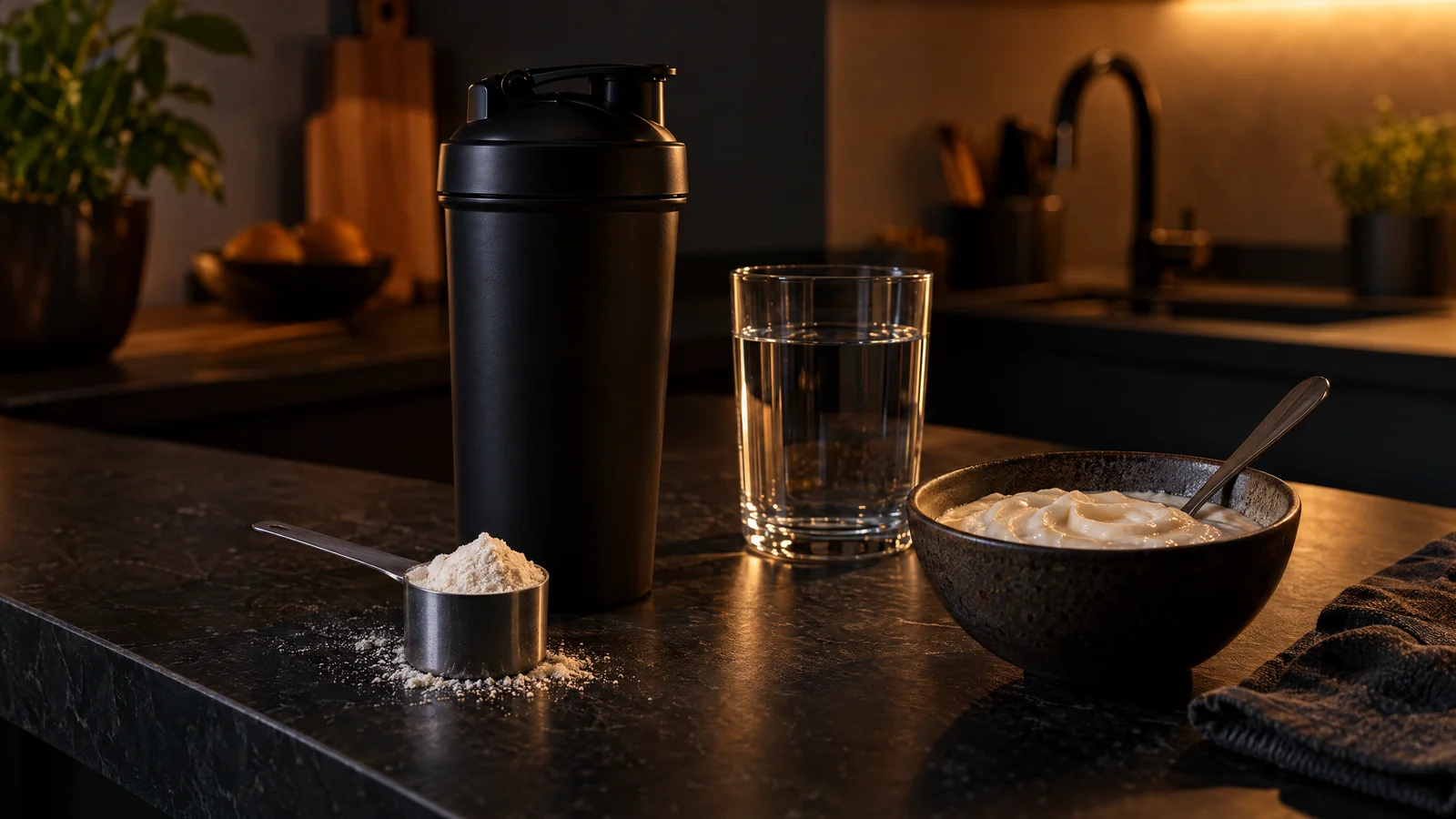
Casein is thick. It needs more liquid than whey and keeps thickening as it sits. Mix it fresh and expect a heavier texture.
If a full shake is too much at night, a smaller serving plus yogurt or cottage cheese does the same job.
Food-first alternatives
You do not need a powder to get slow-digesting protein at night. Cottage cheese, Greek yogurt, milk and casein-rich dairy all deliver it.
Powder is convenient, consistent and easy to measure when you are tired. That is the only advantage worth paying for.
Casein protein Lebanon: what to check before you buy
If you want casein protein, Lebanon has options, and Muscle Plus describes itself as the official and exclusive Scitec Nutrition agent in Lebanon. That matters practically: you can check the product page against the tub in your hand.
The Scitec 100% Casein Complex sold through Muscle Plus lists these label facts:
- Micellar casein concentrate as the dominant protein source, combined with calcium caseinate
- Added L-glutamine and taurine
- Added plant enzymes, papain and bromelain
- Sugar free and gluten free
- 22 g of protein in the Belgian chocolate flavour and 23 g in vanilla
- 920 g per tub, listed as 30 servings
- Recommended on the label for evening consumption
Those details come from the live product page. If a claim is not on that page or on the label, treat it as unconfirmed.
When you compare casein products, check four things: protein per serving, the protein sources used, the ingredient list beyond protein, and the flavour you will actually drink. Our whey protein buying guide for Lebanon walks through the same checks for whey, and the logic carries over.
For the full range, including casein and whey side by side, browse the protein powders category. If you are still deciding when to place your shake, our post on the best time to take a protein shake covers the timing question in detail.
Frequently asked questions
Is casein better than whey before bed?
Not proven. Casein delivers amino acids more slowly, but the only direct overnight comparison found casein and whey produced similar muscle protein synthesis rates (Trommelen et al., 2023). Casein is a reasonable choice, not a superior one.
How much casein should I take before bed?
Research protocols used 30–45 g. For a specific product, follow the directions on the label, and count the shake toward your daily protein total rather than adding it on top.
Can I take whey before bed instead of casein?
Yes. Whey raised overnight muscle protein synthesis above placebo in the same head-to-head trial. If whey is what you have, and it fits your daily intake, it works.
Does casein before bed make you gain fat?
A moderate protein dose before sleep is not inherently fattening. The ISSN position stand notes that pre-sleep casein raises overnight muscle protein synthesis and metabolic rate without influencing lipolysis. Total calorie intake still decides body composition.
Is casein good for weight loss?
It can help indirectly. A thick, slow-digesting shake is filling, and protein supports lean mass during a calorie deficit. It is not a fat burner, and no supplement replaces an energy deficit.
Can I take casein on rest days?
Yes. Muscle repair continues on rest days, and total weekly protein intake matters more than whether you trained that day.
Does casein help you sleep?
The evidence is weak. Casein contains tryptophan, but no study we reviewed showed a reliable sleep improvement from a bedtime shake. Do not treat casein as a sleep treatment.
Where can I find casein protein in Lebanon?
Muscle Plus describes itself as the official and exclusive Scitec Nutrition agent in Lebanon, and lists the Scitec 100% Casein Complex among its protein powders.
The bottom line
Casein before bed is worth it when it fixes a protein gap. The research supports protein before sleep, and it supports casein as one effective source. It does not show that casein beats whey overnight, and it does not show that timing matters more than your daily total.
So build the boring foundation first. Set your daily protein target, spread it across three to four feedings, and use a slow-digesting protein at night only if it helps you get there.
If you want a casein option you can verify against its label, start with the Scitec 100% Casein Complex page and read the directions on the tub.
If you have a medical condition, take medication, are pregnant or nursing, or are under 18, speak with a qualified healthcare professional before using supplements.
This article is for general information and is not medical advice.
Written by the Muscle Plus Editorial Team.