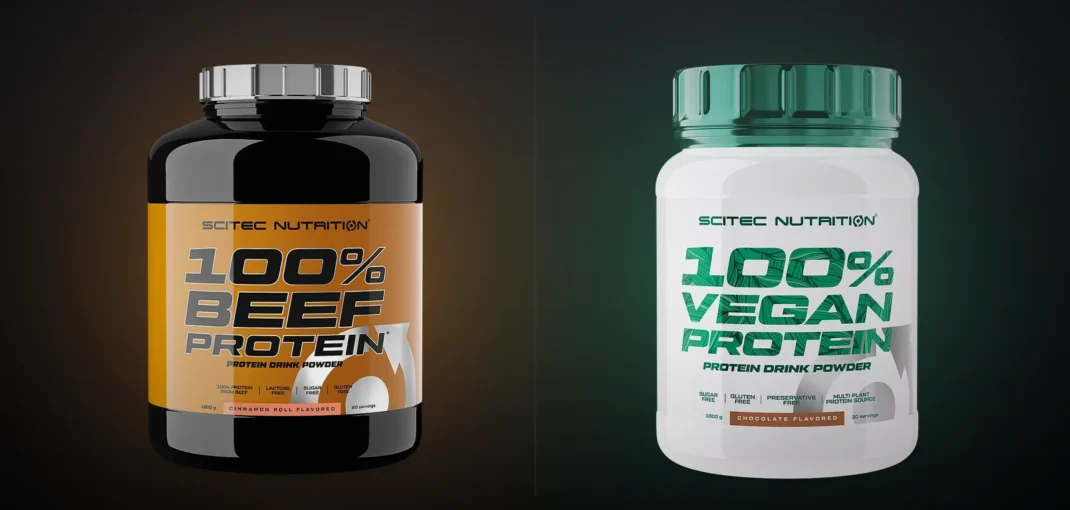
Dairy-free protein has two routes: beef or plants. Beef protein powder is a complete protein made from hydrolysed beef, and it contains no lactose. Vegan protein blends several plant sources so they cover each other’s amino acid gaps. Both can support muscle growth. They differ in digestion, taste, texture and daily convenience.
This guide compares beef protein powder in Lebanon with vegan protein powder, using the products Muscle Plus lists and the published research behind both.
Why Dairy-Free Protein Is Not Just “Protein Without Whey”
People look for dairy-free protein for different reasons. Some have lactose intolerance, which causes bloating, gas, diarrhoea or stomach pain after dairy (NIDDK). Others avoid milk by choice, or simply prefer a different taste and texture.
This matters because “dairy-free” and “vegan” are not the same label. A dairy-free protein powder simply contains no milk ingredients. Beef protein meets that definition, yet it is an animal product. Vegan protein contains no animal ingredients at all. If your only requirement is avoiding lactose, both options are open to you.
Protein itself is not optional. Protein contributes to the growth and maintenance of muscle mass and to the maintenance of normal bones, claims approved by the European Food Safety Authority (EFSA). Adults have a population reference intake of 0.83 g of protein per kilogram of body weight per day (EFSA). People who train regularly often eat more than that.
What Is Beef Protein Powder?
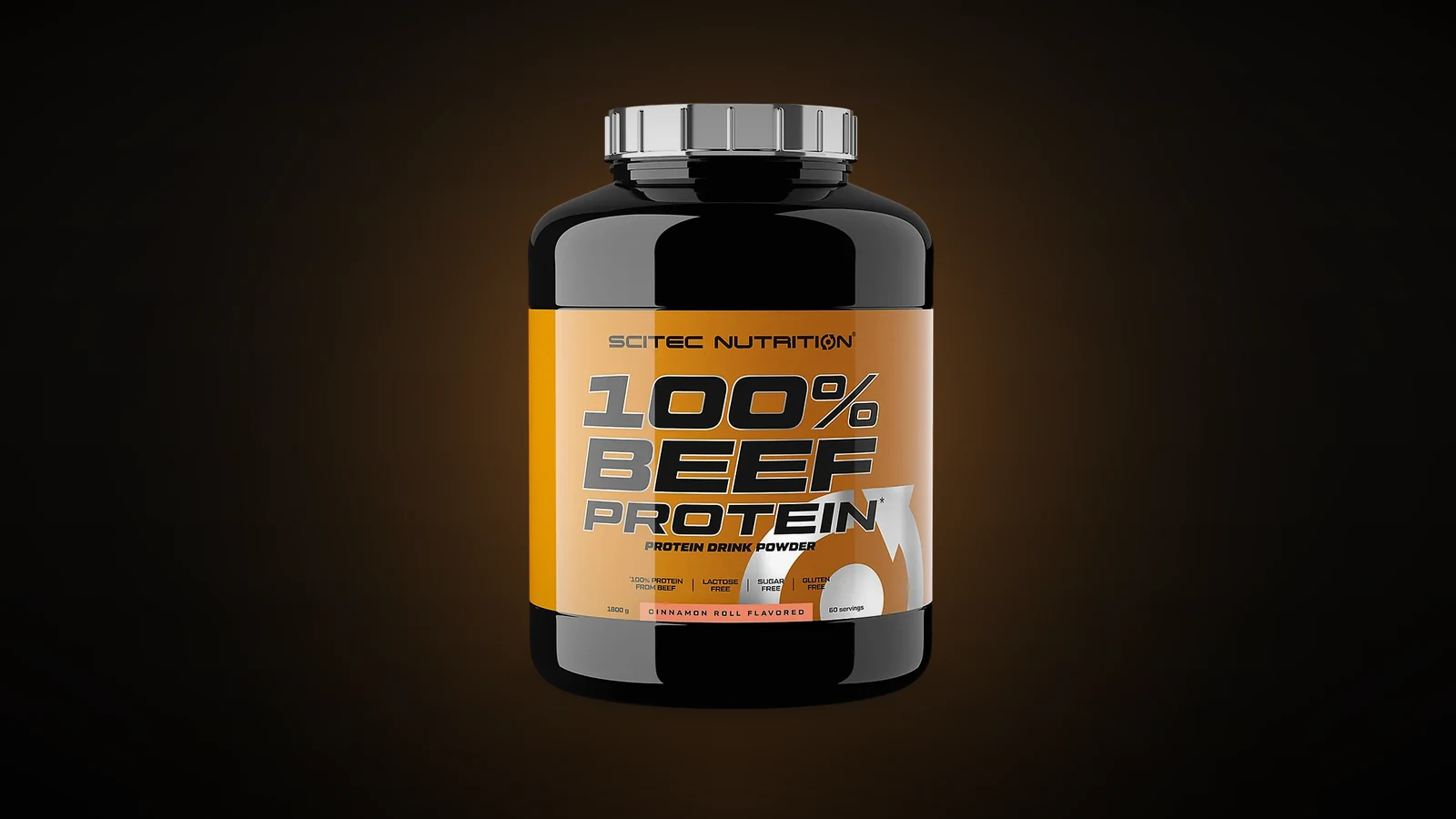
Beef protein powder is made from beef, not from milk, soy or peas. The raw material is cooked, then treated with enzymes. That hydrolysis step breaks long protein chains into smaller peptides. Water, fat and carbohydrate are removed, and what remains is dried into a powder.
How Hydrolysed Beef Protein Is Made
Hydrolysis is the key step, and it is why labels use the word “hydrolysed”. Smaller peptides are easier for the gut to handle than intact protein. The finished powder mixes into water and behaves like any other shake. Once flavoured and diluted, it does not taste like a steak.
What 100% Beef Protein Delivers
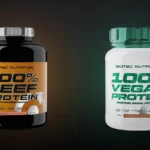
Muscle Plus lists Scitec Nutrition 100% Beef Protein with 25 g of hydrolysed beef protein per serving. The page describes it as lactose-free, sugar-free, gluten-free and low-fat, with the exact thresholds printed in its footnotes. One serving is 30 g, or one scoop, mixed with 250 ml of water. Follow the directions on the label rather than a generic protocol.
Because the protein comes from beef, it is naturally dairy-free. That makes it an option for anyone who wants an animal protein without whey or casein.
What Is Vegan Protein Powder?
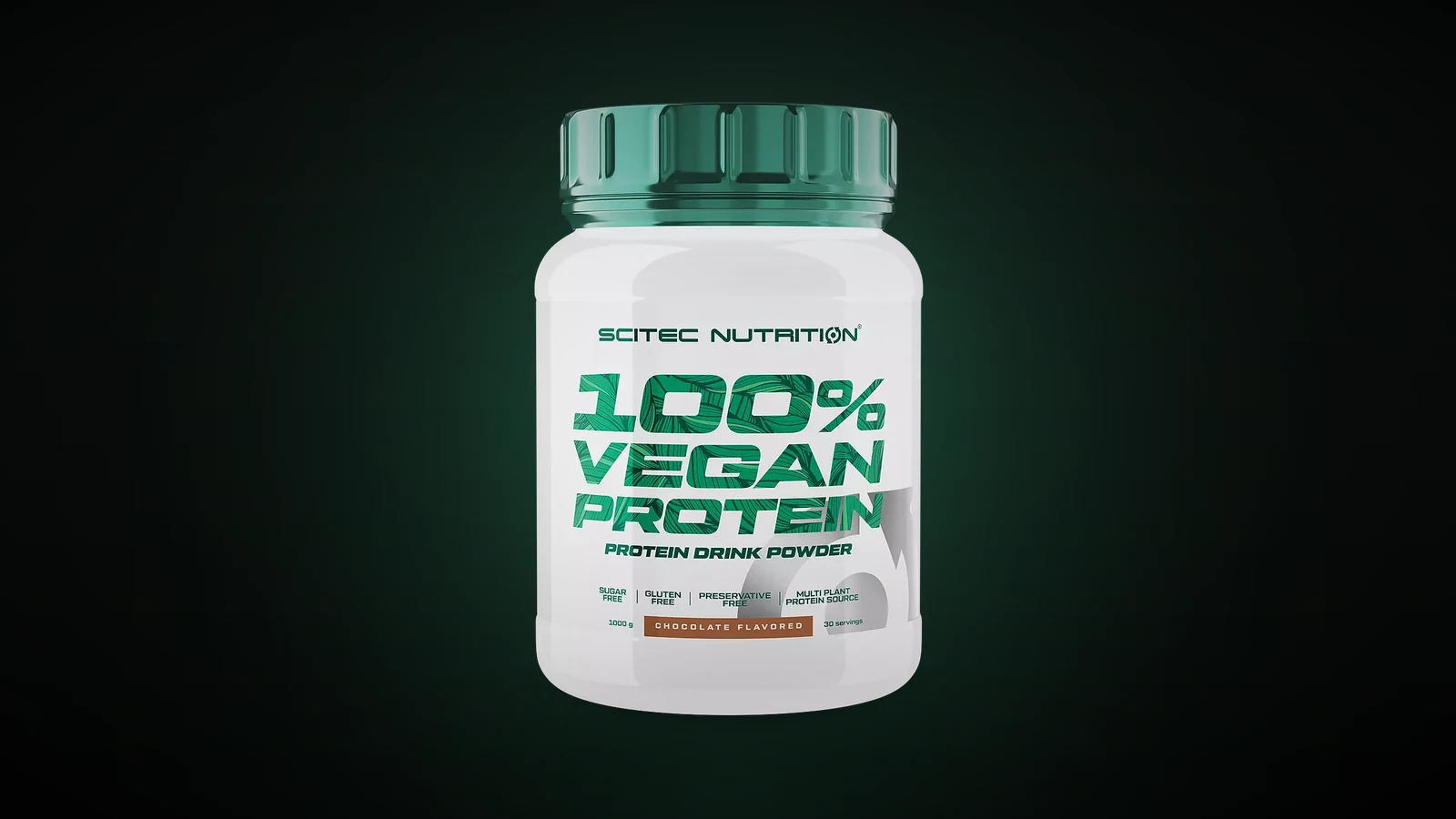
Vegan protein powder is made from plant sources. Pea and rice are the most common pair, because pea is low in methionine and rice is low in lysine. Blending them fills both gaps. Some products also add hemp, pumpkin seed, coconut or soy.
Single-Source vs Blended Plant Protein
A single-source plant protein is simple, but its amino acid profile is usually narrow. A blend is more balanced by design. When you compare products, check whether the label lists one plant source or several. That detail tells you more than most front-of-pack claims.
What 100% Vegan Protein Delivers
Muscle Plus lists Scitec Nutrition 100% Vegan Protein as a combined plant protein built on five sources: pea, rice, coconut, pumpkin and pomegranate. The page also states that it is sugar-free, gluten-free and free from preservatives, and that it is fortified with 0.8 µg of vitamin B12 per serving, which is 32% of the nutrient reference value.
That addition matters. Vitamin B12 is not made by plants, so unfortified plant foods are not a reliable source (Niklewicz et al., 2022). One serving is 33 g, or three-quarters of a scoop, mixed into 300 ml of water. Follow the directions on the label.
Beef Protein vs Vegan Protein: Side-by-Side
| What you are comparing | Beef protein | Vegan protein |
|---|---|---|
| Protein source | Hydrolysed beef | Blend of plant proteins |
| Complete amino acids | Yes, from a single source | Yes, when sources are blended |
| Dairy and lactose | None | None |
| Fibre | Little to none | Some, depending on the blend |
| Vitamin B12 | Naturally present in beef | Often added, because plants do not supply it |
| Serving example (Muscle Plus) | 30 g in 250 ml water | 33 g in 300 ml water |
| Watch out for | Texture in plain water | Sweeteners, gums and a longer ingredient list |
The table hides one thing. Both products are dairy-free, and both are complete proteins. The real differences are digestion, taste and how each fits your week. The next sections take those one at a time.
Amino Acids, Leucine and Protein Quality
Protein quality has two parts: which amino acids are present, and how well your body absorbs them. Animal proteins usually score better on both. Plant proteins often fall short on one or two essential amino acids, and their structure can slow digestion (Pinckaers et al., 2021).
Why Leucine Gets So Much Attention
Leucine is the amino acid that switches on muscle protein synthesis. A plant-based meal can trigger the same response, but it often needs a larger dose of protein to do it. Pinckaers and colleagues describe three practical fixes: eat more plant protein, blend sources, or fortify with the missing amino acid. A five-source formula like 100% Vegan Protein takes the blending route.
Can Plant Protein Be Complete on Its Own?
Soy protein is the best-known complete plant protein. Most other single plants are not. A well-built blend can be complete, which is exactly why pea and rice appear together so often. Plant protein also works in practice. In a 12-week trial, 161 young men took pea protein, whey or a placebo while resistance training. Biceps thickness increased in all groups, with no significant difference between the pea and whey groups (Babault et al., 2015). Strength rose everywhere.
Digestion: Which One Sits Better?
This is where most people make their decision, and it is personal. Two people can react differently to the same tub.
Lactose and Dairy Sensitivity
Lactose intolerance is caused by low lactase levels in the small intestine. Symptoms include bloating, gas, diarrhoea, nausea and abdominal pain (NIDDK). Whey and casein are dairy proteins, so they can bring lactose along. Beef protein and vegan protein do not. If dairy is your only problem, both options solve it.
Fibre, Antinutrients and Bloating
Plant powders can cause bloating for a different reason. Some contain added fibre, and some retain small amounts of phytates or trypsin inhibitors. Processing removes most of these compounds, but not always all of them. If a plant blend feels heavy, a simpler formula with fewer gums and sweeteners is worth testing.
Muscle, Strength and Recovery: What the Research Shows
Beef protein has been tested directly. A systematic review and meta-analysis of randomised trials found that beef protein supplementation increased lean body mass and reduced fat mass compared with a non-protein control. Against whey or chicken protein, it made no difference to body composition or strength (Valenzuela et al., 2019).
The plant-versus-animal picture is less tidy. A 2021 meta-analysis found that animal protein had a more favourable effect on lean mass than plant protein, especially in younger adults. Protein source did not affect muscle strength (Lim et al., 2021).
Read those two findings together and the message is simple. Total daily protein and consistent training do most of the work. Protein source is a second-order detail, and a good plant blend closes most of the gap.
Taste, Texture and Mixing
Beef protein has a reputation it does not deserve. A flavoured, hydrolysed beef powder does not taste like meat. It behaves like most protein powders, and it mixes into water without grit when you follow the ratio on the tub.
Plant blends are more variable. Pea protein can taste earthy. Rice protein can feel chalky. Good manufacturers mask both with flavour systems and sweeteners, which is why plant labels are often longer. Neither option is better here. It comes down to which one you will actually drink.
How to Choose Dairy-Free Protein in Lebanon
It helps to decide by need rather than by hype. A few questions settle most of it.
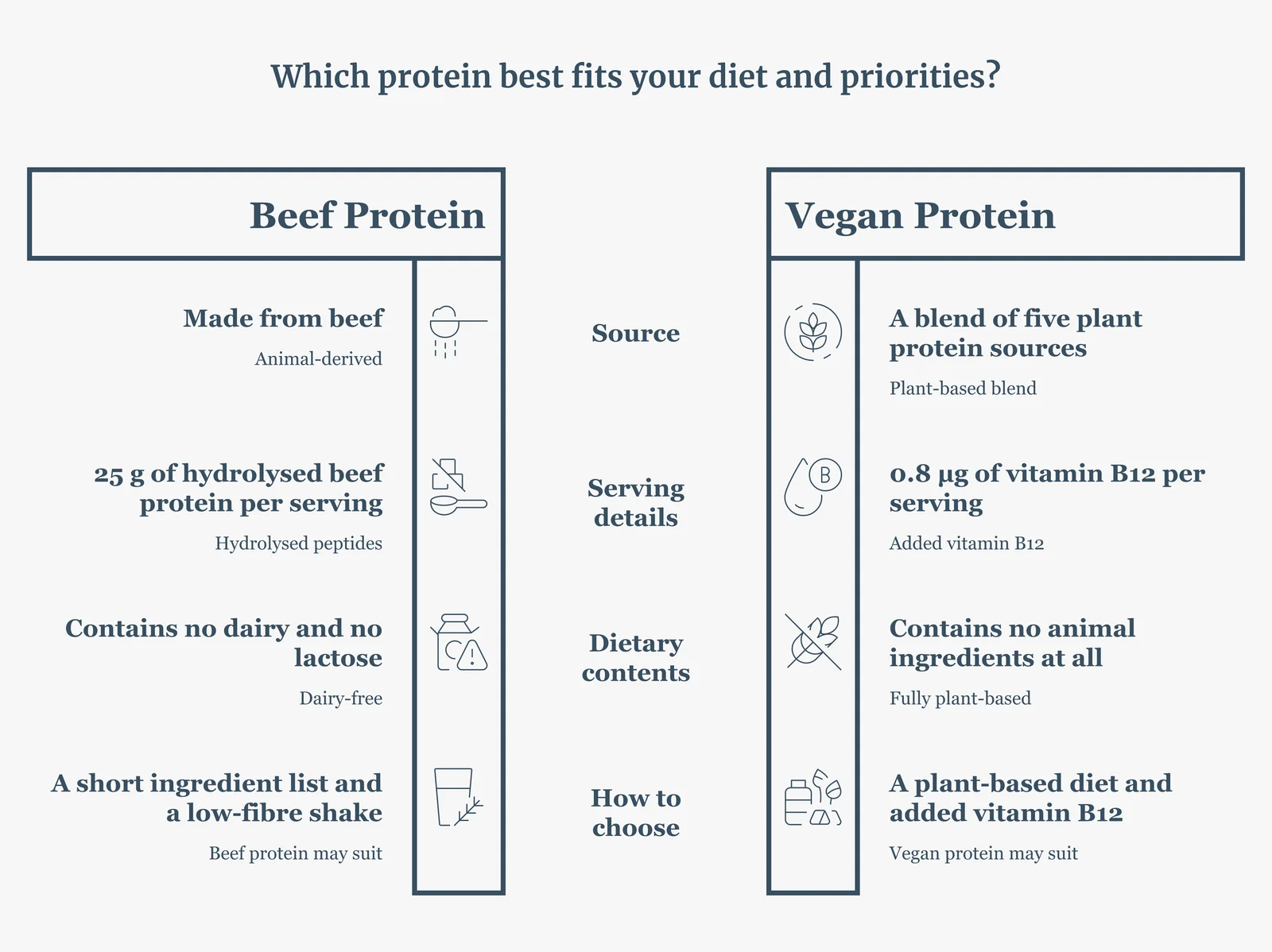
Choose Beef Protein If…
- You want a complete animal protein without dairy.
- You prefer a short ingredient list and a low-fibre shake.
- You are happy to build your protein intake around meat-based sources.
- You want a single-source protein that needs no blending to be complete.
Choose Vegan Protein If…
- You follow a vegan or vegetarian diet.
- You want plant fibre alongside your protein.
- You prefer a plant-based ingredient list for ethical or personal reasons.
- You want a product fortified with vitamin B12.
What to Check on the Label
Look at four lines: protein per serving, ingredients, allergens and directions. Compare protein per 100 g rather than per scoop, because scoop sizes differ. Check that “dairy-free” is not only a marketing badge, and read the allergen statement. Then check who the official distributor is. That is the simplest way to know what you are buying.
Buying Beef Protein Powder in Lebanon: Where Muscle Plus Fits
Muscle Plus describes itself as the official and exclusive Scitec Nutrition agent in Lebanon. Both products in this comparison are listed on its site: Scitec Nutrition 100% Beef Protein and Scitec Nutrition 100% Vegan Protein. The full protein powders range sits under strength and endurance.
If you currently use whey, two guides cover the next questions. The whey concentrate vs isolate comparison explains the two main forms, and is whey protein safe for beginners covers first-time use. Anyone building a first stack can start with the best protein powder for muscle gain in Lebanon.
Common Myths About Dairy-Free Protein
Myth: Dairy-Free Means Vegan
No. Beef protein is dairy-free and also an animal product. Dairy-free describes what is absent, not what is present.
Myth: Plant Protein Cannot Build Muscle
It can. Pea protein supported similar training gains to whey in the trial above. The catch is dose and blending, not biology.
Myth: Beef Protein Is Just Collagen
Not if the label says beef protein isolate or hydrolysed beef protein. Collagen comes from skin, bones and connective tissue, and it is not a complete protein. Read the ingredient list, not the front of the tub.
Frequently Asked Questions
Is beef protein powder dairy-free?
Yes. Beef protein is made from beef, so it contains no milk, lactose or whey. Check the allergen statement anyway, because flavour systems and shared production lines can vary between products.
Is vegan protein powder dairy-free?
By definition, yes. Vegan products contain no animal ingredients, including dairy. A product labelled plant-based rather than vegan may still contain dairy, so read the label.
Which is better for muscle growth, beef protein or vegan protein?
Both can support muscle growth when total protein is adequate. Beef protein is complete on its own, while vegan protein depends on the blend. If you choose plant protein, pick a multi-source blend or a larger serving.
Does beef protein taste like meat?
A flavoured, hydrolysed beef protein does not. It is a powder that mixes into water like any other shake. Unflavoured versions can carry a savoury note, which is why they suit soups and sauces more than plain water.
Can I use beef protein if I am lactose intolerant?
Beef protein contains no lactose, so it avoids the trigger behind lactose intolerance symptoms. If symptoms continue, speak to a healthcare professional, because lactose is not the only possible cause.
How much protein do I need per day?
EFSA sets a population reference intake of 0.83 g per kilogram of body weight per day for adults (EFSA). People who train regularly often eat more, and intakes up to twice that level are considered safe for healthy, active adults.
Are there heavy metals in protein powders?
Testing has found detectable heavy metals in some protein powders, and plant-based products tend to carry a higher burden than animal-based ones (Bandara et al., 2020). The same risk assessment concluded that typical intakes did not raise health risk. Buy from brands that test and label clearly.
The Bottom Line
Beef protein and vegan protein both solve the dairy problem, and both can support muscle when daily protein is in place. Beef protein gives you a complete animal protein with no lactose and a short ingredient list. Vegan protein gives you a plant-based option with fibre and added B12, provided the blend is well built.
Choose by what your body tolerates and what your diet allows. Then check the label, the amino acid sources and the directions. Both product pages above list the full label, so you can compare them line by line before you decide.
If you have a medical condition, take medication, are pregnant or nursing, or are under 18, speak with a qualified healthcare professional before using supplements.
This article is for general information and is not medical advice.
Written by the Muscle Plus Editorial Team.