

Shopping for a multivitamin in Lebanon starts with your meals, not a training claim. A multi may help fill gaps when food choices are limited, but it does not replace a varied diet or build muscle on its own. Compare the serving, nutrient amounts, safety limits and any overlap with products you already take.
If you train, your routine still rests on enough food, protein, sleep and appropriate exercise. Vitamins and minerals support normal body functions; they are not workout fuel or a shortcut around those foundations. This guide keeps that distinction clear while helping you compare actual labels.
Ready to compare? Browse the vitamins and minerals range or open Scitec Daily Vitamin and use the checklist below. Muscle Plus describes itself as the official and exclusive Scitec Nutrition agent in Lebanon. This is a commercial buying guide, not an independent product review.
Start with your multivitamin buying checklist
A product can be convenient without being necessary. Before adding a multi vitamin to your basket, work through these questions:
- What gap are you trying to fill? Consider your regular meals and any food groups you avoid.
- Is a broad formula needed? If one nutrient is the concern, ask whether a targeted product or professional assessment is more appropriate.
- What is the daily serving? Count tablets, capsules or packets, not just the bottle size.
- How much of each nutrient is in that serving? Compare amounts in milligrams or micrograms as well as the label’s percentage.
- Are you doubling up? Check your other supplements, fortified foods and medicines for the same nutrients.
- Do the warnings fit your situation? Check medicines, age, pregnancy, breastfeeding, health conditions and allergens.
- Is the pack information clear? Check the current label, expiry date, seller details, price and delivery terms before ordering.
If a listing and the pack disagree, do not guess. Ask the seller or a pharmacist to clarify the exact product and serving.
Food first: what vitamins and minerals do for training
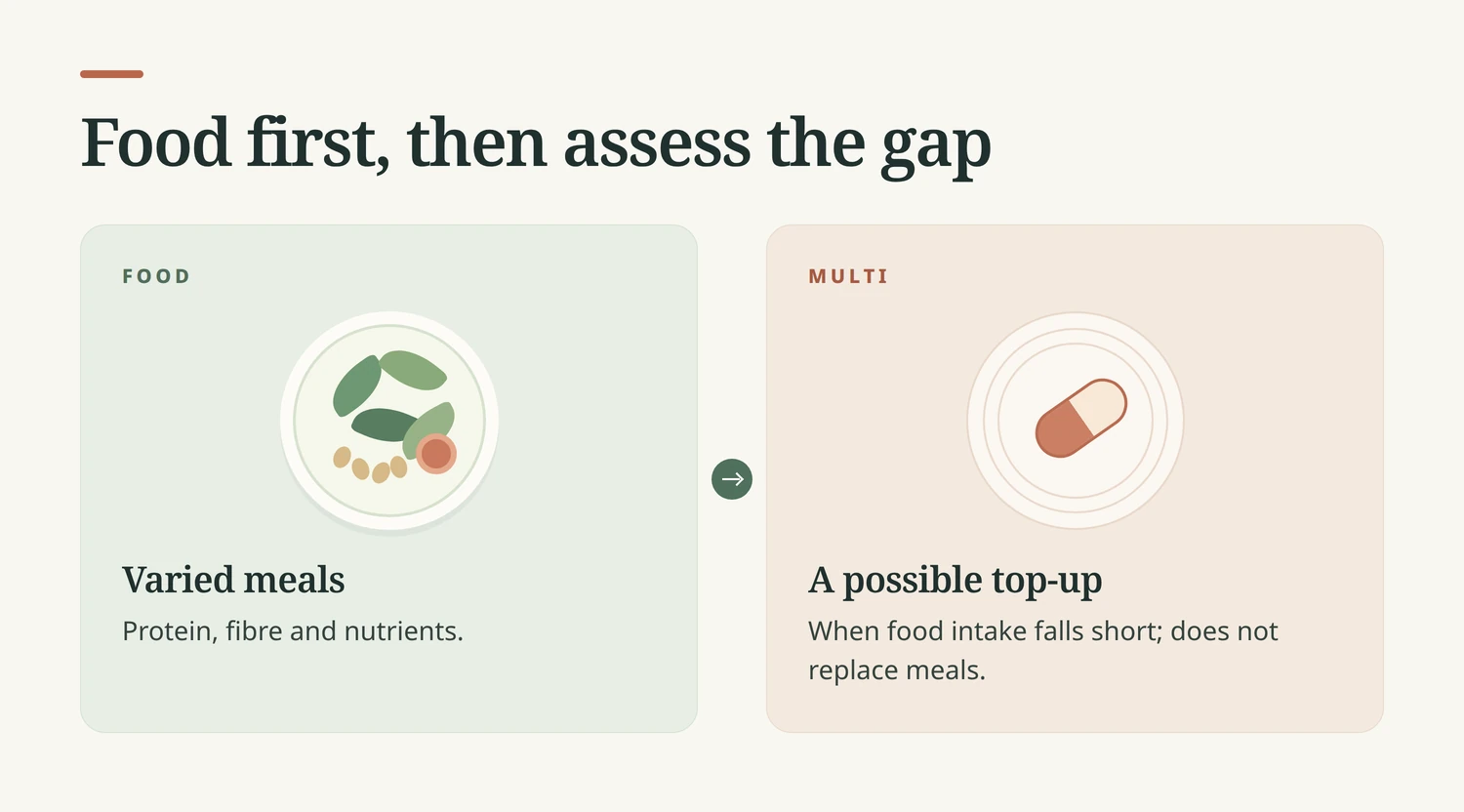
Vitamins and minerals are micronutrients. Your body needs them for normal processes, including muscle and nerve function and the release of energy from food. They contain no calories and do not replace a meal or a training programme.
The NIH Office of Dietary Supplements explains that a multivitamin cannot replace a varied diet. Food also provides protein, fibre and other useful components. If meeting protein needs is difficult through meals, compare the protein powders range as a separate food-convenience decision.
Build a useful plate before buying a bottle
A practical starting point is to include a protein source, a grain or other carbohydrate, and vegetables or fruit across meals. Beans, lentils, chickpeas, nuts, eggs, dairy, fish, meat and leafy vegetables can all contribute different nutrients. Choose combinations that fit your preferences and needs.
For example, lentils with rice and a lemon-dressed salad provide different nutrients from eggs with bread and vegetables. Fish with a grain and greens adds another combination. These are meal ideas, not promises that every individual requirement is covered.
A restrictive diet, limited appetite or long cutting phase can make variety harder. A registered dietitian can help review the pattern before you choose a product. A multi may be useful, but it cannot add the calories or protein missing from an inadequate diet.
What supplements can and cannot do
Correcting a genuine nutrient shortfall is different from improving performance in someone who already gets enough. A peer-reviewed review of micronutrients and athletic performance found no physical-performance benefit from supplementation in well-nourished athletes.
A product described as supporting normal muscle function is not promising muscle growth. Likewise, a nutrient that contributes to energy metabolism does not act like a stimulant. Look for a specific reason to buy rather than a promise on the front of a pack.
Vitamins and minerals for gym-goers: the practical overview
There is no official set of “gym vitamins.” These nutrients matter for normal health whether or not you train. The table connects the draft’s key nutrients with ordinary food choices and a realistic buying question.
| Nutrient | Role and food examples | Shopping question |
|---|---|---|
| Vitamin D and calcium | Vitamin D helps calcium absorption; calcium supports bones. Fatty fish, fortified foods and dairy or suitable alternatives can contribute. | Does your diet or situation justify a discussion about vitamin D or calcium? |
| Magnesium | Supports normal muscle and nerve function. Nuts, seeds, legumes, whole grains and leafy greens provide it. | How much magnesium is in your multi and any separate product? |
| Zinc | Supports normal protein synthesis and immune function. Meat, seafood, dairy, beans and nuts are sources. | Does another product already contain zinc? |
| Iron | Helps carry oxygen in blood and supply it to muscles. Meat, beans and lentils are sources. | Is iron actually appropriate for you, or should you seek assessment? |
| Vitamin B12 | Supports blood and nerve cells. Animal foods and fortified foods can supply it. | If you avoid animal foods, is your B12 source reliable? |
| Vitamin C | Helps the body absorb iron from plant foods. Citrus fruits and vegetables provide it. | Are you comparing a normal dietary top-up with a high-dose product? |
| Omega-3 fats | EPA and DHA are fats, not vitamins or minerals. Fatty fish provides them. | If considering fish oil, how much EPA plus DHA is in one serving? |
Vitamin D and calcium: normal muscle and bone function
Vitamin D helps the body absorb calcium. It also has a role in normal muscle and nerve function. Some foods are fortified, while fatty fish and egg yolks provide vitamin D naturally. See the NIH vitamin D guide.
Sun exposure can contribute, but it varies with clothing, skin, time outdoors and other factors. Living somewhere sunny does not tell you your individual vitamin D status. If you are concerned about your intake or a possible deficiency, discuss assessment with a qualified healthcare professional.
Calcium matters too. Dairy products, fortified alternatives and other foods can contribute. A multi may contain relatively little calcium, so read the actual label rather than assuming the bottle covers your whole diet.
Magnesium: muscles, nerves and energy metabolism
Magnesium is involved in muscle and nerve function, protein production and many other processes. Nuts, seeds, legumes, whole grains and leafy greens are useful food sources. The NIH magnesium fact sheet explains the difference between dietary needs and the limit for supplemental magnesium.
Some basic multis contain relatively little magnesium. That does not automatically make a separate supplement necessary. Check your diet and existing products first. Excess supplemental magnesium can cause diarrhoea, nausea and abdominal cramping.
Zinc: a nutrient to count across products
Zinc helps the body make proteins and supports normal immune function. Meat, poultry, seafood, dairy, beans and nuts can supply it. Plant foods contain zinc, though compounds called phytates can reduce absorption. See the NIH zinc guide.
Zinc appears in many multis as well as stand-alone products. Long-term excessive intake can lower copper levels and affect immunity. The goal is an appropriate intake, not the highest number on a label.
Iron: avoid guessing from tiredness
Iron is needed to make haemoglobin, which carries oxygen in blood, and myoglobin, which supplies oxygen to muscle. Needs vary with age, diet and menstruation. Vitamin C in the same meal can help the body absorb iron from plant foods. The NIH iron fact sheet explains food sources and safety.
Feeling tired does not establish an iron shortfall. Too much iron can cause stomach problems, and high intakes can be harmful. Ask a healthcare professional whether assessment is appropriate before choosing an iron-containing product for that reason. Keep iron-containing supplements away from children.
Vitamin B12 and other B vitamins
Vitamin B12 supports healthy blood and nerve cells. Animal foods contain it naturally, and some foods are fortified. People who eat little or no animal food should plan a reliable source of B12, which may include fortified foods or a supplement. See the NIH B12 fact sheet.
B vitamins help the body use energy from food. They do not supply calories. The NIH notes that extra B12 does not improve energy or athletic performance in people who already get enough. Check B6 across products too; prolonged excess can affect nerves.
Vitamin C and antioxidant products
Fruit and vegetables provide vitamin C. It supports normal functions and helps with the absorption of plant iron. The NIH vitamin C fact sheet lists an adult upper limit of 2,000 mg a day; higher intakes can cause nausea, cramps or diarrhoea.
More is not automatically useful for training. In one small 11-week endurance study, high-dose vitamin C and E altered some cellular markers of adaptation, without a clear improvement in measured performance. That does not mean ordinary amounts of these nutrients from food harm training.
Omega-3: a separate fats decision
Omega-3 fats are not a type of multivitamin. Fatty fish provides EPA and DHA. Walnuts and some seeds contain another omega-3 called ALA, which the body converts to EPA and DHA only in small amounts. See the NIH omega-3 guide.
If you rarely eat fish, a supplement is one option to discuss; it is not mandatory for every gym-goer. Some EU-authorised wording links EPA and DHA to normal heart function at a combined daily intake of 250 mg. That is not a promise of muscle growth or strength. Check the EU health claims register for claim wording and conditions.
When a multivitamin makes sense for gym training in Lebanon
A broad top-up may fit a restricted diet
The NIH multivitamin fact sheet notes that a multi may help people who cannot get enough nutrients from food. Examples include people with low calorie intake, poor appetite or restricted food choices. A prolonged cut or avoiding several food groups can make that conversation relevant.
A formula containing a range of nutrients may be convenient when several gaps are plausible. It is still worth comparing the amounts. A one-a-day label does not mean every nutrient is present, or that each amount suits you.
When food or a targeted choice may be enough
If your meals are varied and adequate, another supplement may add cost without solving a problem. If only one nutrient is in question, a broad multi may add other nutrients you do not need. Discuss the specific concern with a dietitian, doctor or pharmacist rather than buying several products at once.
Vegans may need particular attention to B12. A person concerned about iron should seek individual assessment. Someone who rarely eats fish can compare food and omega-3 options. None of these examples establishes a deficiency or a treatment plan.
Situations that need individual advice
Ask a qualified healthcare professional before using supplements if you have a medical condition, take medication, are pregnant or breastfeeding, or are under 18. The same applies if you are planning pregnancy or have kidney problems. Nutrient requirements and risks can differ from the adult examples in this guide.
Persistent fatigue or other symptoms deserve a proper assessment. Do not assume they point to one vitamin or use a shopping guide to diagnose the cause.
How to read a multivitamin label before buying
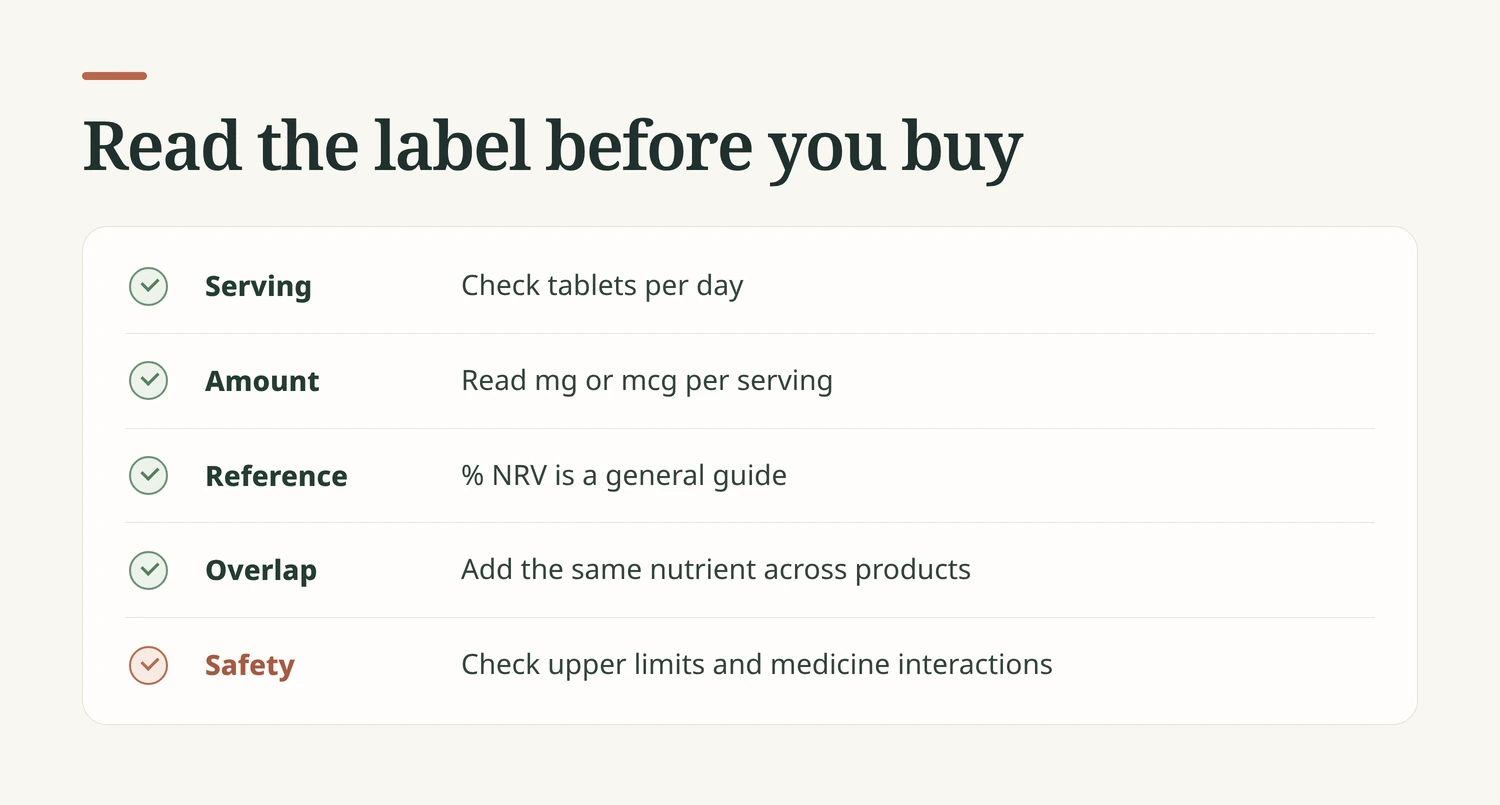
Start with the serving, not the front label
Find the stated daily serving and the number of servings in the container. One bottle may contain 90 tablets but fewer than 90 daily servings if its serving is more than one tablet. Multi-packs can be less obvious: count all packets and tablets that make up the stated serving.
Read the full ingredient list and directions. Check allergies and dietary preferences, including gelatin, fish or other ingredients where relevant. A colourful front label does not tell you what each serving contains.
Read amounts and percentages together
Labels may show milligrams (mg), micrograms (mcg or µg), and a percentage called NRV or DV. A microgram is one thousandth of a milligram. Keep the units consistent when comparing products.
On a label using EU values, % NRV shows the share of a general adult nutrient reference value in the stated serving. It is not your personal requirement and is not a safety ceiling. US-style labels may use % DV instead. The EU labelling regulation lists the reference values.
A high percentage is not evidence that a product works better. Look at the actual amount, your diet and your other products. Some ingredients in a multi can be high while calcium or magnesium remains comparatively low.
Add up overlap before adding a product
Write down every multi, mineral, fortified drink and supplement you use. Compare labels for vitamin A, vitamin D, B6, iron, zinc and selenium. Include medicines when their ingredients are relevant, and ask a professional if you cannot assess the total.
For a concrete example, the checked Daily Vitamin label lists 15 mg zinc per tablet, while the checked Scitec Zinc panel lists 25 mg per tablet. Together, those products provide 40 mg zinc from supplements alone. Food adds more. The US adult upper limit is 40 mg from all sources, so this is not a sensible stack to assume is safe. The NIH zinc fact sheet explains the limit.
Compare pack value without inventing prices
Check the current price on each live product page. Divide that price by the stated number of daily servings to compare cost per serving. Use the same currency and compare equivalent serving definitions.
A lower cost per serving does not make a formula suitable. Check the nutrients and warnings first. Delivery charges, offers, pack sizes and availability can change, so confirm the final order details separately.
Safety limits: what to count and when to seek advice
Upper limits are not daily targets or suggested doses. The figures below are US reference limits for adults aged 19 and over, not Lebanese regulations. Other authorities may use different values. A healthcare professional may recommend an amount above a limit for a specific medical reason and monitor its use.
| Nutrient | US adult upper limit | What the limit counts |
|---|---|---|
| Magnesium | 350 mg per day | Supplements and medicines, not magnesium naturally present in food or drinks. |
| Zinc | 40 mg per day | Total from food, drinks, supplements and medicines. |
| Iron | 45 mg per day | Total from food, drinks and supplements. |
| Vitamin D | 100 mcg per day, equal to 4,000 IU | Total from food, drinks and supplements. |
These figures come from the NIH fact sheets for magnesium, zinc, iron and vitamin D. They do not establish that a product is safe for every individual.
Different authorities may set different limits
The European Food Safety Authority has set an adult upper limit of 12 mg of vitamin B6 per day from all sources. The European Scientific Committee on Food set an adult zinc limit of 25 mg per day from all sources. These European values differ from US guidance. See the EFSA B6 assessment and EFSA’s discussion of the zinc limit.
This matters when comparing a high-B6 multi with a separate zinc or B6 product. A limit is not proof of harm at a particular intake, but it is a reason to avoid casual stacking and seek individual advice. Do not use adult reference values as children’s guidance.
Medicines, medical conditions and pregnancy
Supplements can interact with medicines. For example, vitamin K can affect warfarin, while zinc, magnesium or iron can interfere with some medicines. High doses of omega-3 may increase bleeding problems with anticoagulants. Check the NIH multivitamin and omega-3 guidance.
Do not stop or change medication based on a supplement label. Ask your doctor or pharmacist about the particular combination. Pregnancy, breastfeeding, kidney problems and other conditions call for individual advice rather than a standard gym product.
The NIH reports that the US FDA advises no more than 5 g per day of EPA and DHA combined from supplements. This is a safety boundary, not a daily goal. Check the label and speak to a professional if you take anticoagulants.
Compare Muscle Plus options by purpose
The products below are different formats, not interchangeable recommendations. Details were checked on the individual pages on November 11, 2026. Labels and listings can change. Confirm the current page and received pack before use, and check each live product page for its current price.
| Product | What its checked page describes | What to check before choosing |
|---|---|---|
| Scitec Daily Vitamin | A one-a-day multi with 26 active ingredients. The checked panel lists 50 mcg vitamin D, 15 mg zinc and 10 mg B6 per tablet. | It also lists iron. Review the full panel, high percentages and overlap with other products. |
| Scitec Zinc | A targeted zinc product; the checked panel lists 25 mg per tablet. | It is not a complete multi. Check total zinc and confirm the pack form with the seller. |
| Scitec ZMB | A combination of zinc, magnesium and vitamin B6. | The checked page gives conflicting serving directions. Clarify the current pack and directions before use. |
| Scitec Omega-3 | The checked two-capsule serving lists 2,000 mg fish oil, including 700 mg total omega-3. | The panel lists 360 mg EPA and 240 mg DHA per serving. Fish oil and EPA plus DHA are not the same figure. |
| Scitec Monster Pak | A multi-based pack with additional ingredients and stimulants, rather than a plain multi. | Check all packets, caffeine, B6, allergens and other ingredients. Compare with everything else you take. |
Daily Vitamin: read beyond one tablet a day
The checked Daily Vitamin panel lists vitamin D at 50 mcg, or 1,000% NRV. It also lists 18 mg iron, 57 mg magnesium and 15 mg zinc per tablet. The 1,000% figure is a label reference, not a recommendation to add more vitamin D or evidence of a training effect.
Its checked panel also lists 10 mg vitamin B6 per tablet. That leaves limited room below EFSA’s 12 mg adult total-intake limit once food and other sources are considered. Review your complete intake with a professional if unsure. Check the live page and pack for the complete formula and warnings.
Monster Pak: an expanded formula needs a wider check
The checked Monster Pak panel describes a daily serving of two packets. It lists 174 mg total caffeine and 25 mg vitamin B6 for that serving. The B6 amount alone is above EFSA’s adult total-intake limit. This is not proof of harm, but it calls for a careful suitability discussion rather than automatic use.
The pack includes more than vitamins and minerals. Review stimulants from other products and drinks, the full ingredient list and allergen information. If you only want a simple multi, an expanded pack may not match that purpose. Check the current pack and seek advice if uncertain.
Zinc, magnesium and omega-3: when a targeted product may fit
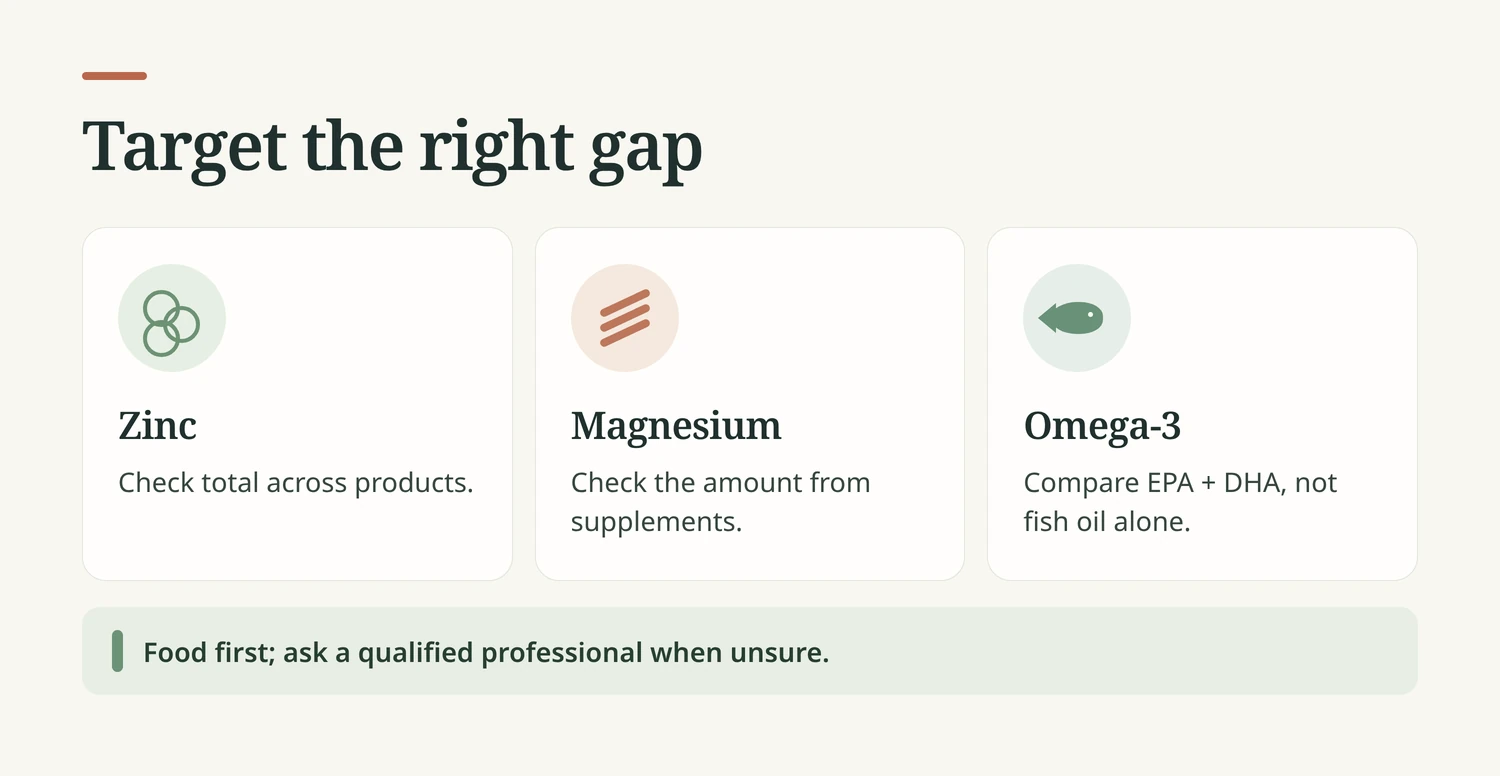
A targeted product can be easier to assess when the concern is specific. It does not remove the need to review meals, medicines and other supplements. A professional can help determine whether a particular nutrient is actually the issue.
Zinc and zinc–magnesium combinations
The Scitec Zinc panel lists zinc from gluconate and bisglycinate. Its selector and nutritional panel use different descriptions of the pack form. Confirm the physical pack with the seller. Do not add it to a zinc-containing multi without counting the total.
Scitec ZMB combines zinc, magnesium and B6. When checked, its nutritional table described one capsule as the daily amount, while the directions elsewhere said two capsules. Do not choose between those directions by guesswork. Ask the seller or a pharmacist to clarify the current pack before use.
The number of capsules changes the amounts of all three nutrients. This matters especially for supplemental magnesium and B6. The checked one-capsule panel lists 237 mg magnesium and 5.8 mg B6; do not assume that figure represents the correct daily direction while the listing is inconsistent.
Omega-3: compare EPA and DHA, not just oil
The checked Scitec Omega-3 panel lists 2,000 mg fish oil in a two-capsule serving. Of that, 700 mg is total omega-3, including 360 mg EPA and 240 mg DHA. Together, EPA and DHA account for 600 mg in the stated serving.
Those three numbers describe different things. Another product may have a similar fish-oil amount but a different EPA and DHA content. Check serving size, fish and gelatin ingredients, other omega-3 products, warnings and the current pack. For non-fish options, the NIH omega-3 guide also describes algae-based supplements.
Buying vitamins in Lebanon: check the pack and seller
Check the current listing and the delivered pack
Product descriptions, formulations and availability can change. Before ordering, compare the product name, serving size, ingredients, warnings and pack size on the actual listing. Check the live product page for price; do not rely on a category tile or an old screenshot.
When the pack arrives, review the expiry date, batch or lot information, seal and directions. Compare them with what you ordered. If something is unclear or a label conflicts with the listing, ask the seller before using it. These checks do not establish that a product is suitable for you.
Check quality claims without assuming certification
A seller may mention testing or certification. Read what the specific programme covers and whether the actual product or batch is listed. The NIH guide to dietary supplements explains that some independent quality marks concern manufacturing and label contents. They do not establish that a supplement is effective or suitable for everyone.
Athletes subject to sport testing should review the applicable rules and the testing programme for the exact product. Do not assume a category, brand or ordinary quality mark covers every prohibited substance or every batch.
Five buying mistakes to avoid
- Buying for a vague training promise. Identify a dietary gap or a practical reason first.
- Comparing bottle counts instead of servings. Check how many tablets or packets make up a day.
- Treating % NRV as a safety limit. Read the amount and compare total intake with relevant guidance.
- Combining overlapping formulas. Count zinc, B6, vitamin D, iron and other repeated ingredients.
- Ignoring contradictions or warnings. Clarify an unclear pack or serving before using the product.
Frequently asked questions
Do gym-goers need vitamins and minerals every day?
Yes. The body uses micronutrients every day, including on rest days. Food is the starting point. A supplement may help when dietary intake falls short, but training alone does not mean everyone needs a multivitamin.
Can I get everything I need from food?
Many people can meet most nutrient needs through varied foods. Individual circumstances differ. People who avoid animal foods should plan a reliable B12 source, and a restricted diet can make other gaps more likely. A healthcare professional or dietitian can help assess your situation.
Is a multivitamin enough on its own?
No. A multi does not replace meals, calories, protein or dietary fibre. Basic formulas often contain relatively little calcium and magnesium. Check the label and your overall diet rather than assuming one tablet covers everything.
Should I take zinc and magnesium together?
They appear together in some products, but the combination is not automatically necessary. Count the amount of each nutrient across your supplements and medicines. If the label or serving directions are unclear, ask a pharmacist or the seller before use.
Is omega-3 worth considering for gym-goers?
It may be worth considering if you rarely eat fish or need help assessing your intake. Compare EPA plus DHA per serving, not fish-oil weight alone. Omega-3 is not a promise of muscle growth or strength, and it is not a substitute for a varied diet.
Do vitamins give you energy?
Vitamins do not contain calories or act like stimulants. Some help the body use energy from food. If you feel unusually tired, consider your food intake, sleep and training load, and seek professional advice rather than assuming a vitamin is the cause.
Should I take a multivitamin on rest days?
Your nutrient needs do not stop on rest days. If you use a supplement, follow the current pack’s directions and any individual advice from your healthcare professional. That does not mean everyone needs a multi every day. Read more about supplements on rest days.
Is a high percentage of NRV a sign of a stronger choice?
No. NRV is a general labelling reference, not a measure of how well a product works or a personal safety limit. Compare the actual amount in each serving and add up overlapping sources before choosing.
Can I combine Daily Vitamin with a separate zinc product?
Check the totals first. The checked Daily Vitamin and Scitec Zinc panels list 15 mg and 25 mg of zinc respectively. Together they reach the US adult upper limit from supplements alone, before food. Do not assume that combination is appropriate.
What if a product page and the pack disagree?
Do not guess which instruction applies. Pause before use and ask the seller or a qualified pharmacist to clarify the exact product, batch and serving directions. Product information can change, and a different pack may have a different label.
How do I compare multivitamin prices in Lebanon?
Check the current price on each individual product page and divide it by the stated number of daily servings. Compare ingredients, warnings and delivery charges as well. A lower cost per serving does not establish that a formula suits your needs.
Do I need a multi if I eat a varied diet?
Not necessarily. A varied diet may supply the nutrients you need. A supplement can be useful when food intake is restricted or a professional identifies a reason, but a training routine alone does not establish a need for one.
The takeaway: choose the reason before the product
Food comes first. A multivitamin can be a practical top-up when your intake has a gap, but it is not a muscle-building shortcut. Check the serving, amounts, warnings and overlap before comparing pack value.
For broader context, read our guide to gym supplements for beginners in Lebanon. Then browse the vitamins and minerals range or check the current label for Scitec Daily Vitamin. Ask a qualified professional if the product or your needs are unclear.
This guide is for general information and is not medical advice.
Muscle Plus describes itself as the official and exclusive Scitec Nutrition agent in Lebanon.
Written by
Muscle Plus Editorial Team — Supplement Experts
The editorial team has product-category experience with vitamins, minerals, labels, and current shopping pages. Muscle Plus has a commercial relationship as the exclusive Scitec Nutrition agent in Lebanon. This is not an independent product review. Independent educational claims in this guide are cited to the linked authority sources.
Last reviewed: November 11, 2026