A creatine supplement can support repeated, high-intensity exercise, such as lifting weights and sprinting. It is not a steroid, an instant energy boost, or a shortcut around training. The strongest evidence supports creatine monohydrate, while many claims about other forms remain unproven.
Yet choosing creatine can feel confusing. Labels mention micronized powder, hydrochloride, blends, and different serving weights. Online advice often mixes real side effects with unsupported myths.
This guide explains creatine benefits, types, safety, and common misconceptions. You will also learn how to compare labels without confusing marketing language with research.
What is a creatine supplement, and what does it do?

Creatine is a compound your body makes from amino acids. You also get it from foods such as meat and fish. Most of the body’s creatine is stored in muscle.
A creatine supplement adds to that supply. According to the NIH Office of Dietary Supplements, supplementation can improve certain kinds of exercise performance. Results differ between people and activities.
How creatine helps muscles supply energy
Muscles store some creatine as phosphocreatine. This helps replenish adenosine triphosphate, or ATP, during short, demanding efforts. ATP is the immediate energy source used by working muscle.
Think of a heavy set of squats or repeated sprints. These efforts need energy quickly, with short recovery periods. Increasing muscle creatine stores can support this kind of repeated work.
Creatine does not supply the same sensation as caffeine. You should not expect a sudden rush, faster heartbeat, or an immediate feeling of alertness.
Creatine is not protein or a pre-workout stimulant
Creatine and protein have different roles. Protein supplies amino acids for building and repairing tissue. Creatine supports the muscle’s rapid energy system.
The NIH exercise-performance review discusses these ingredients separately. Neither replaces a balanced diet or structured training.
If your goal is meeting protein needs, explore our whey and other protein powders. If your goal is repeated high-intensity performance, creatine addresses a different need.
Creatine supplement benefits: what does the evidence support?
The best-supported creatine benefits relate to short, repeated bursts of intense exercise. Claims about every sport, every person, or every health outcome go beyond that evidence.
Strength, power, and repeated high-intensity effort
The NIH professional fact sheet reports benefits for strength, power, and repeated maximal-effort muscle contractions. Examples include weightlifting, sprinting, and demanding phases of team sports.
These findings do not mean everyone gains the same number of repetitions. Your diet, training, muscle characteristics, and starting creatine stores can affect your response.
Hypothetical example: Two lifters follow the same programme. One notices better performance across later sets, while the other notices little change. Neither experience alone proves that all creatine products work equally well.
Muscle development alongside resistance training
Creatine can help support training adaptations over time. However, the distinction between water weight and new muscle tissue matters.
An early increase on the scale can reflect water retention. It should not be labelled instant muscle growth. Longer-term progress also depends on resistance training, food intake, and recovery.
The peer-reviewed review of common creatine questions explains this distinction. Creatine can support a training programme; it does not replace the programme.
Who may benefit from creatine?
Adults who lift weights or perform repeated sprints are clear candidates for considering creatine. People following vegetarian diets may start with lower muscle creatine stores.
The NIH notes that vegetarians may show a greater response to supplementation. That does not mean every vegetarian needs it or every meat eater responds poorly.
Women can also benefit from creatine. The 2021 evidence review rejects the idea that it is effective only for men. The size of any benefit still varies by person and outcome.
What creatine does not reliably promise
Creatine is not a universal endurance supplement. The NIH describes limited value for activities such as distance running and prolonged swimming.
Extra body weight may also matter in weight-sensitive sports. An endurance athlete should assess that trade-off rather than assuming every supplement improves performance.
Research into other uses continues. This guide does not recommend creatine for treating conditions or promise broader health effects. Exercise evidence should not be repackaged as a medical claim.
Types of creatine: which form is best supported?
Creatine monohydrate is the evidence-based starting point. The NIH identifies it as the most widely used and studied supplement form.
A more complicated name does not prove better results. Compare the research, actual creatine amount, and full formula before comparing marketing claims.
Creatine monohydrate
Creatine monohydrate is creatine combined with a molecule of water. It is the reference form used in much of the performance and safety research.
Its main advantage is the depth of supporting evidence. You do not need a novel form to access the established performance benefits.
The research review on creatine forms found no established superiority of alternative forms over monohydrate. Claims about better muscle uptake or better results need direct evidence.
Micronized creatine monohydrate
“Micronized” describes smaller particles. It does not describe a different chemical form of creatine.
Smaller particles may improve the mixing experience. That should not be confused with proof of greater strength or muscle gains.
Compare a micronized product with other monohydrate products using its ingredient list and declared amount. Particle size alone is not a reason to expect superior results.
Creatine hydrochloride, or HCl
Creatine HCl is a different creatine salt. It is commonly promoted for its solubility and smaller serving sizes.
Dissolving more easily does not automatically mean better exercise performance. The evidence review does not establish alternative forms as superior to monohydrate.
Do not assume a smaller HCl serving matches the evidence for a monohydrate serving. Compare disclosed amounts and product-specific research, not slogans.
Buffered creatine and creatine ethyl ester
Buffered products change the formulation’s acidity. Creatine ethyl ester changes the creatine molecule chemically. Both have been marketed as improvements on monohydrate.
However, the available comparative evidence does not establish them as better choices. The 2021 review discusses these forms and the limits of superiority claims.
“Advanced” on a label is not a study result. Ask whether a claim comes from a direct comparison at relevant amounts.
Other salts and multi-creatine blends
Products may include creatine phosphate, pyruvate, citrate, or other forms. A blend can contain several forms alongside unrelated ingredients.
The number of forms does not establish the amount of creatine delivered. Nor does it establish better results than a transparent monohydrate product.
Check whether individual quantities are disclosed. A total blend weight may include ingredients that are not creatine at all.
Powder, capsules, and flavour are product formats
Powder and capsules describe presentation, not necessarily a different creatine type. Likewise, flavoured creatine can still contain ordinary creatine monohydrate.
Read the ingredient list to identify the actual form. Then check the amount supplied by the complete labelled serving.
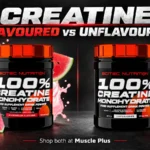
For taste and ingredient differences, read our creatine flavoured vs unflavoured comparison. That guide covers the choice in detail without confusing flavour with effectiveness.
Creatine side effects and safety: is creatine safe?
For healthy adults, creatine monohydrate has a substantial safety record when used as directed. The NIH consumer fact sheet describes safety over weeks and months, with reassuring evidence over several years.
That conclusion does not mean every person or every multi-ingredient product has the same risk profile. Your medical situation and the complete formula matter.
Water retention and changes in body weight
Water retention is a recognised effect of creatine use. It can increase body weight, especially early in supplementation.
This is not the same as gaining body fat. It is also not proof that all early weight gain represents new muscle tissue.
If your sport has weight categories, consider this before starting. Monitor how changes affect performance rather than judging success only by the scale.
Stomach discomfort and digestive symptoms
Some people experience gastrointestinal discomfort, including nausea or diarrhoea. The NIH professional review discusses reported digestive symptoms and overall tolerability.
Do not exceed the product’s directions or assume a larger amount gives faster results. Added ingredients may also affect how a product feels.
If symptoms persist, stop using the product and seek medical advice. Do not dismiss repeated discomfort as something you must tolerate.
Kidney safety and blood-test interpretation
The 2021 scientific review found no evidence of kidney damage from recommended creatine use in healthy individuals. This should not be extended to people with kidney disease.
Creatine can also affect creatinine measurements. Creatinine is a waste product used in some kidney-function assessments. A change needs clinical interpretation, not a social-media diagnosis.
Tell your clinician about creatine and other supplements before blood tests. Never assume an abnormal result is harmless because you take creatine.
Talk to your doctor if any of these apply
Talk to your doctor before considering creatine if you have kidney disease, take medication, are pregnant, or are under 18. Breastfeeding also requires professional advice.
Healthy-adult safety research does not establish suitability in these situations. Follow the product’s warnings as well as your clinician’s guidance.
For example, Scitec’s flavoured creatine label excludes pregnancy, nursing, and use under 18. It also warns against use with medical conditions or medication.
Creatine myths: what does the research actually say?

Many creatine myths begin with a real observation, then stretch it into an unsupported conclusion. Water weight, a blood-test result, or a small study needs context.
Myth: creatine is an anabolic steroid
Fact: Creatine is not an anabolic steroid. Its chemical structure and role differ from steroid hormones.
The peer-reviewed misconceptions review explains that creatine supports the phosphocreatine energy system. It does not work through the same mechanism as anabolic steroids.
Myth: creatine inevitably damages healthy kidneys
Fact: Recommended creatine use has not been shown to cause kidney damage in healthy people in the cited review.
The important word is healthy. Existing kidney disease, abnormal test results, or medication use requires individual medical guidance.
Do not turn reassuring evidence into a claim that monitoring or medical advice is unnecessary.
Myth: creatine has been proven to cause hair loss
Fact: Current direct trial evidence does not establish that claim. A 2025 randomised controlled trial assessed hormones and hair outcomes over 12 weeks.
Thirty-eight resistance-trained men completed the study. Researchers found no significant differences between creatine and placebo in DHT or measured hair outcomes.
This is useful evidence against the claim, not proof of zero lifetime risk for everyone. The trial’s duration and participant group limit what it can answer.
Myth: creatine causes dehydration and muscle cramps
Fact: The 2021 research review found that experimental evidence did not support this general claim.
That does not remove the need for normal hydration during exercise. Heat, sweating, illness, and training demands still matter, whether you use creatine or not.
If you develop symptoms, address them rather than assuming either creatine or dehydration must be the cause.
Myth: creatine weight gain is the same as fat gain
Fact: Early weight changes often reflect water retention. The scientific review does not support the claim that creatine itself increases fat mass.
However, creatine is not a fat-loss supplement. Assess body-composition goals through your diet, training, and longer-term progress.
Myth: creatine is only useful for male bodybuilders
Fact: The evidence includes women and activities beyond bodybuilding. The NIH describes applications in sprinting, weightlifting, and repeated intense efforts.
Suitability depends on your activity and health, not a bodybuilding identity. It is still not equally useful for every sport.
Myth: more creatine types must mean better results
Fact: More forms on the label do not establish superior performance. The research baseline remains creatine monohydrate.
A blend also cannot be compared properly without knowing relevant ingredient amounts. Count the disclosed creatine, not the number of impressive-sounding names.
How to choose a creatine supplement without the hype
A useful label answers three questions: what form is included, how much creatine is supplied, and what else is present. A trustworthy purchase also needs a traceable seller and clear product information.
Check the formula, serving details, and quality evidence
Start with the actual ingredient list. Identify the creatine form and any sweeteners, stimulants, allergens, or other active ingredients.
Then distinguish total powder weight from creatine content. A flavoured serving may include ingredients that contribute weight without contributing creatine.
The NIH supplement guidance also discusses independent quality-certification programmes. Where certification is claimed, verify the exact product through the certifier. Do not assume every item from a brand is certified.
Three Scitec products illustrate the label differences
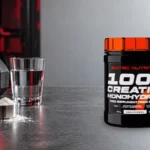
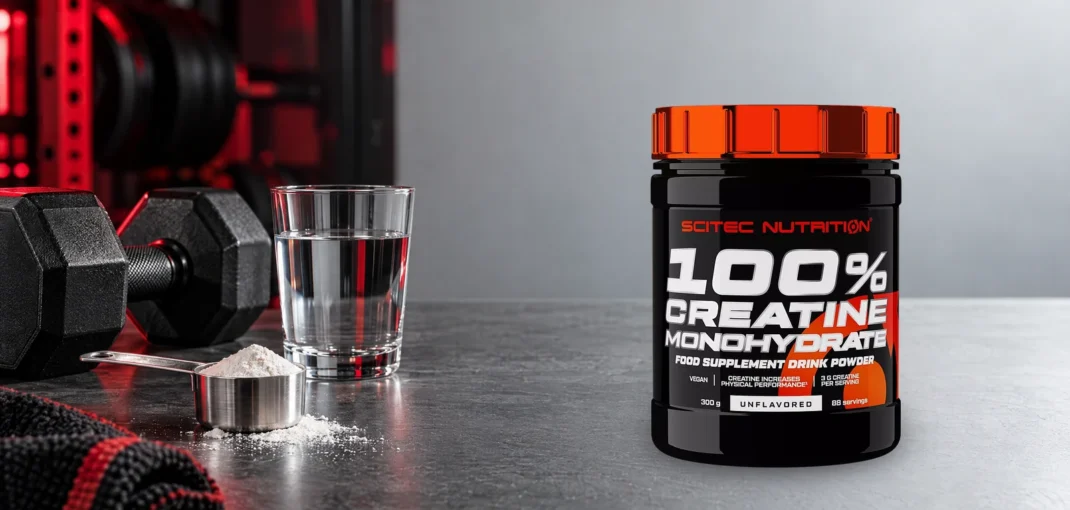
Scitec 100% Creatine Monohydrate, unflavoured is a straightforward monohydrate option. Its simple formula makes the creatine form easy to identify.
Scitec 100% Creatine Monohydrate, flavoured also uses monohydrate. Its published label declares 3 g creatine per serving. The total powder serving weighs more because the formula includes additional ingredients.
Scitec Monster Pak lists monohydrate, phosphate, and pyruvate within a multi-ingredient matrix. Their individual amounts are not disclosed on the published page. It also contains stimulants, so it is not interchangeable with plain creatine.
These are label-based examples, not results from a trial comparing the finished products. Three creatine forms do not prove a larger creatine amount or superior benefits.
Keep use instructions separate from product selection
Once you understand the benefits, type, and safety considerations, follow the product’s current directions. Check the packaging because formulas and serving information can change.
For dosage, loading, and timing questions, use our guide to taking creatine for best results. This article focuses on what creatine does and how to judge its claims.
Hypothetical example: A buyer compares a plain powder with a multi-ingredient pack. The sensible first check is the disclosed creatine amount and other actives, not the larger pack’s total weight.
Frequently asked questions about creatine supplements
What does a creatine supplement do?
A creatine supplement increases the creatine available to muscles. It can support performance during repeated, short, high-intensity efforts. It does not replace training, food, or recovery.
What is the best-supported type of creatine?
Creatine monohydrate is the most widely studied form. Other forms have not established superior benefits over it. Choose using evidence, disclosed amounts, and the complete ingredient list.
Is creatine safe for healthy adults?
Creatine monohydrate has reassuring safety evidence in healthy adults when used as directed. That does not establish suitability for kidney disease, pregnancy, breastfeeding, medication use, or people under 18. Seek medical advice in those situations.
Does creatine make you gain fat?
Creatine-related weight gain often reflects water retention, not increased body fat. Early scale changes are not proof of new muscle either. Creatine is not a fat-loss supplement.
Does creatine cause hair loss?
A 2025 controlled trial found no significant differences in measured hair outcomes between creatine and placebo. It involved resistance-trained men over 12 weeks. It does not establish zero lifetime risk in every population.
Can women use creatine?
Women can benefit from creatine; it is not a male-only supplement. Personal suitability depends on health, training, and product warnings. Pregnancy and breastfeeding require medical advice, and the cited Scitec label excludes both.
Is micronized creatine a different type?
Micronized creatine monohydrate has smaller particles, but remains monohydrate. A different mixing experience does not prove greater performance benefits.
Is a creatine blend better than plain monohydrate?
Not automatically. Several forms do not prove a better result or an equivalent creatine amount. Check the disclosed quantities and other ingredients before comparing products.
The takeaway: evidence first, marketing second
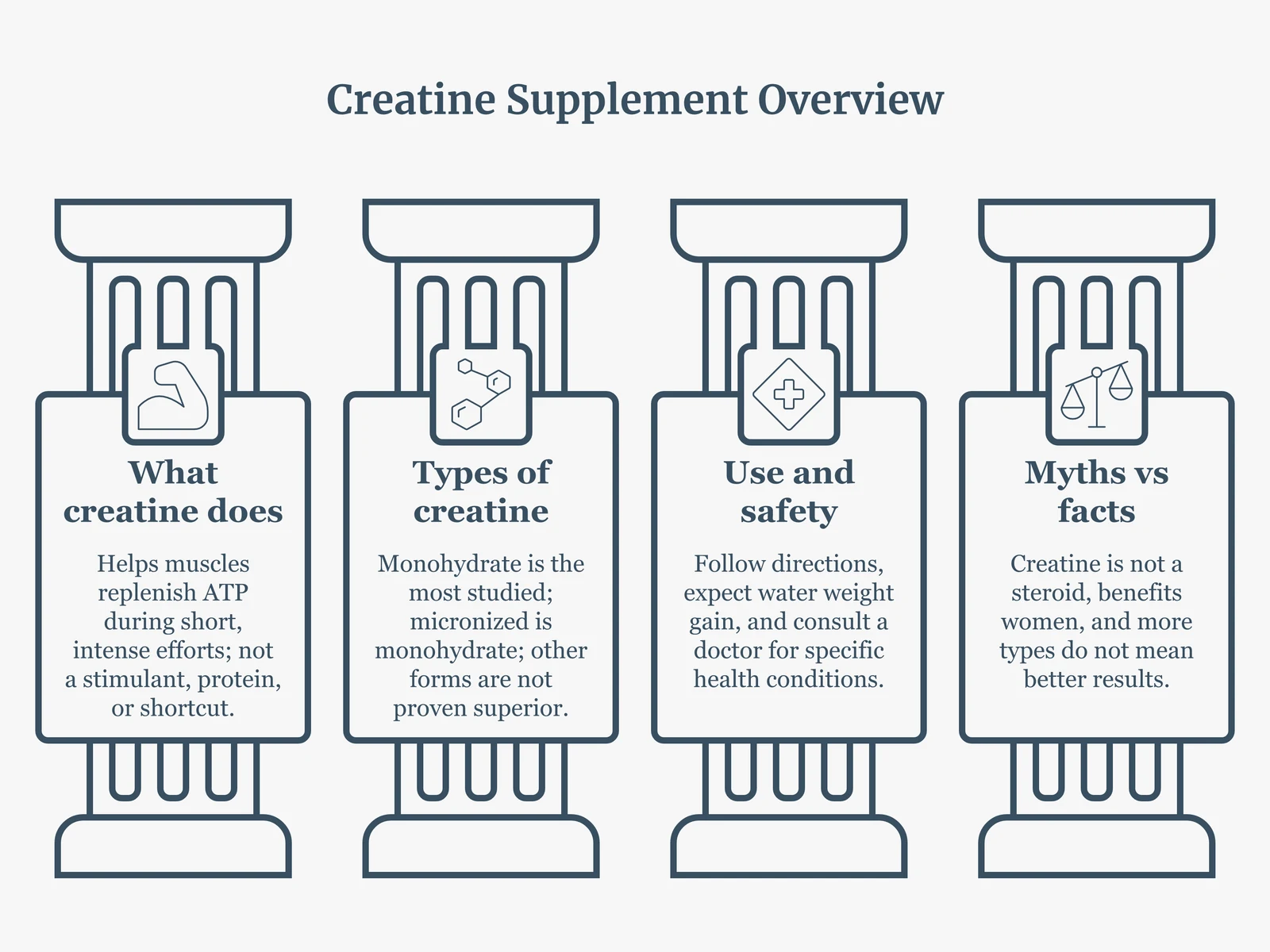
Creatine’s clearest benefits involve repeated, high-intensity performance and support for training. Monohydrate remains the best-studied baseline. Water retention and digestive discomfort deserve practical attention, while common myths need evidence rather than alarm.
Choose a transparent formula and respect the safety boundaries. A supplement can support your routine, but it cannot replace the routine.
Ready to compare suitable options? Explore creatine in Lebanon from Muscle Plus, the exclusive Scitec Nutrition agent in Lebanon. Our team can help explain product labels; medical suitability belongs with your clinician.
Share this guide with a training partner who wants a clearer explanation of creatine. For product questions, contact the Muscle Plus team through the website.
Written by the Muscle Plus Editorial Team. Evidence and published product labels checked on 26 October 2026.
Muscle Plus sells the products mentioned in this guide. The article uses published research and label information, not an independent clinical test or personal case study. Some cited research authors disclose supplement-industry relationships. NIH guidance is also used to support the central performance and safety discussion.
This article is educational and is not personalised medical advice. No independent medical review is claimed.